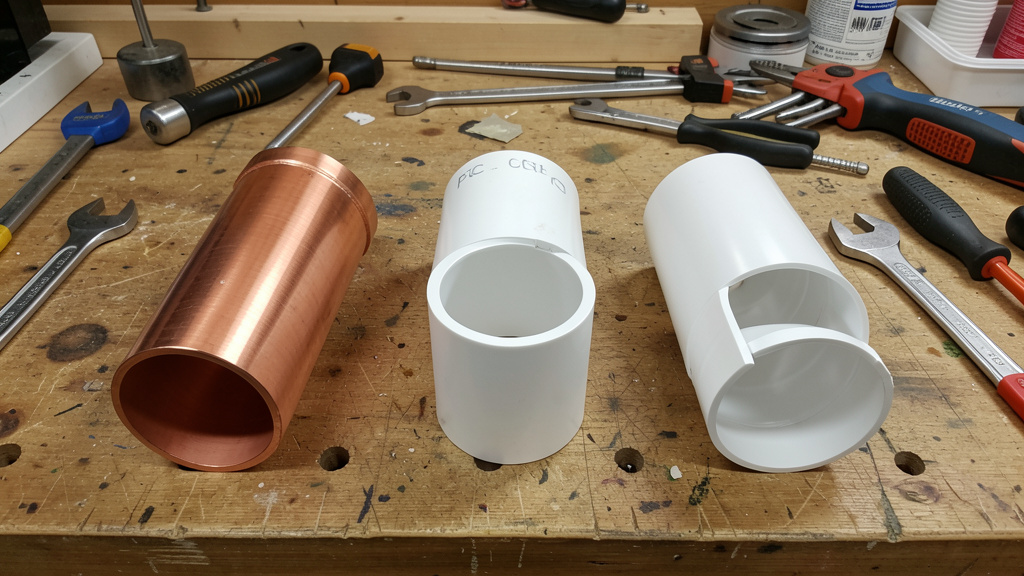
Move Beyond Generic Comparisons. This Practical Guide Aligns Pipe Selection with Your Home’s Unique Climate, Water Chemistry, Local Regulations, and Long-Term Needs—Without Overpromising or Oversimplifying.
Selecting plumbing pipe material is a foundational decision affecting safety, water quality, repair accessibility, insurance considerations, and long-term home value. With copper, PEX, and CPVC each excelling under specific conditions—and abundant misinformation online—homeowners face genuine uncertainty. This guide provides a structured, context-sensitive framework grounded in plumbing principles, code considerations, and real-world constraints. It translates technical factors into actionable insights tailored to your project, location, and priorities. There is no universal “best” material. True confidence comes from matching material properties to your home’s specific environment.
Introduction
Walking through a home improvement store reveals coils of flexible tubing beside rigid white pipes and gleaming copper tubes. Recommendations vary widely: online anecdotes champion one material while dismissing others. This fragmentation reflects a critical truth—plumbing material suitability depends on interconnected variables: locally adopted plumbing codes (IPC or UPC with regional amendments), climate stressors, water chemistry, installation expertise, and future maintenance needs. A solution ideal for a coastal Florida home may be ill-suited for a Minnesota winter. This resource synthesizes plumbing principles, code considerations, and documented performance patterns into a clear decision framework. Whether repiping an older home, installing a new bathroom, or evaluating existing systems, understanding why a material succeeds or fails in your context empowers resilient, informed choices. This guide prioritizes alignment over advocacy—equipping you to select what works for your home.
The 5-Factor Decision Framework: Align Material to Your Reality
Forget simplistic pros/cons lists. Professional plumbing decisions weigh five interdependent dimensions. This framework guides you through each factor sequentially. Your answers naturally narrow options while highlighting nuances often overlooked—such as how municipal water pH influences longevity or why insurance considerations vary by region. Work through these factors before evaluating materials.
Factor 1: Local Building Codes and Insurance Requirements (The Non-Negotiable Boundary)
Legality and insurability establish absolute boundaries. Ignoring this factor risks failed inspections, costly rework, denied claims, or complications during resale.
Why This Factor Sets Boundaries:
Plumbing codes represent minimum safety and public health standards. Jurisdictions adopt model codes (IPC/UPC) but frequently amend them based on regional risks:
* California: The California Plumbing Code prohibits CPVC for interior potable water distribution in residential buildings. PEX is permitted but may require specific types (e.g., oxygen-barrier) for certain applications. Always verify with your local department.
* Florida Coastal Counties: Some restrict copper in new construction due to corrosion risks from humid, saline air. PEX-A is often preferred.
* Chicago Area: Historically required Type K copper for service lines entering the structure; recent amendments increasingly accept specific PEX types with rodent protection. Local requirements vary significantly.
* Insurance Considerations: Some carriers may note material preferences in high-risk freeze or flood zones. Policies rarely prohibit standard materials like copper, PEX, or CPVC where code-compliant, but documentation of proper installation supports future claims. Review policy details or consult your agent regarding material-related stipulations.
How to Verify Accurately:
1. Contact Your Local Building Department: Call or visit the office for your specific city or county. Ask: “For a [repiping/new construction] project at [your address], which materials are approved for interior potable water distribution per the currently adopted plumbing code? Are there local amendments regarding PEX type, copper alloy, or CPVC?” Request written confirmation via email if possible.
2. Review Insurance Documentation: Check policy documents for property condition requirements. When uncertain, contact your agent with a specific question about material considerations for your location.
3. Require Compliance Documentation: Reputable installers provide specifications showing pipe brand, certification marks (NSF/ANSI 61 for potable water, ASTM standards), and alignment with local code—essential for permits and future transactions.
Common Pitfall to Avoid: Assuming retail availability equals local approval. Hardware stores sell materials approved somewhere in the U.S. Your municipal code is the sole authority for your project. Installing non-compliant pipe can delay occupancy, trigger rework costs, and complicate resale.
Factor 2: Climate and Environmental Stressors (The Dynamic Influencer)
Geography subjects plumbing systems to persistent, often invisible forces. Material performance shifts with temperature extremes, water composition, soil conditions, and UV exposure.
Temperature Extremes: Freeze-Thaw Dynamics
The Physics: Water expands approximately 9% when freezing. Rigid pipes (copper, CPVC) cannot accommodate this expansion, leading to cracks under pressure. PEX’s cross-linked structure allows limited expansion, often absorbing pressure without failure—if freezing is not prolonged or extreme.
* Critical Nuance: PEX is freeze-resistant, not freeze-proof. In sustained deep freezes, any pipe can fail. However, PEX generally withstands freeze events better than rigid alternatives. In cold climates (USDA Zones 3–5), PEX-A is frequently specified for branch lines. Copper remains viable only with robust insulation (R-7 or higher) and heat tape on vulnerable runs—adding cost and complexity. CPVC becomes increasingly brittle as temperatures drop and is generally discouraged in freeze-prone areas without exceptional protection.
* Illustrative Scenario: A homeowner in a cold climate installed CPVC to reduce initial costs. During an extended freeze event, multiple joints fractured in an uninsulated crawlspace. Repair costs far exceeded initial material savings. Conversely, a properly installed PEX-A system with standard insulation in the same region typically withstands similar conditions with minimal risk. This underscores why climate alignment matters more than isolated cost comparisons.*
Water Chemistry: Corrosion and Compatibility
Aggressive Water (Low pH < 7.0, High Chlorides/Oxygen): Acidic water accelerates copper corrosion, potentially causing pinhole leaks, blue-green stains, or metallic-tasting water. Municipalities using chlorine-based treatment may exacerbate this. Homes with well water benefit from a full water test before selecting copper. If pH is consistently below 6.8, copper carries elevated risk.
* Hard Water (High Mineral Content): Scale buildup affects all systems but manifests differently. In copper, scale may slightly insulate pipes but can mask underlying corrosion. In PEX and CPVC, scale primarily accumulates on fixture aerators and valve seats due to smooth interior bores. Water softeners reduce scale but introduce sodium, generally benign for all three materials.
* Soil Conditions (Underground Runs):* Buried pipes face unique challenges: electrochemical corrosion (copper), chemical degradation (CPVC in reactive soils), or physical damage (PEX from rodents or shifting earth). Local installers often understand regional soil patterns—consulting them provides valuable context. Protective measures (conduit, proper bedding, cathodic protection where applicable) are essential regardless of material.
UV Exposure: The Outdoor Constraint
All plastic pipes (PEX, CPVC) degrade when exposed to sunlight. UV radiation breaks down polymer chains, causing embrittlement. Never install PEX or CPVC outdoors without UV-resistant conduit, paint rated for the material, or immediate transition indoors. Copper withstands UV exposure but requires attention to thermal expansion in exposed runs. For outdoor spigots, transition to a frost-proof sillcock (with valve mechanism inside the conditioned space) using copper or protected PEX.
Factor 3: Budget Realities—Total Cost of Ownership
Focusing solely on material cost per foot overlooks critical financial dimensions. True budget analysis spans upfront investment, labor, tooling, waste, and long-term ownership factors.
| Cost Component | Copper | PEX (A/B/C) | CPVC | Contextual Insight |
|---|---|---|---|---|
| Material Cost (Per Ft) | Higher ($3.50–$8.00+) | Lower ($0.50–$2.50) | Moderate ($1.00–$3.00) | Raw material cost is only one input. |
| Labor Intensity | Higher (soldering skill) | Lower (mechanical joints) | Moderate (glue precision) | Faster installation typically reduces labor hours. Manifold systems streamline PEX. |
| Tool Investment | Significant (torch, safety) | Moderate (rental options) | Low (basic cutting/gluing) | DIYers: PEX tool kits are often rentable. Copper requires fire safety precautions. |
| Installation Speed | Slower | Faster | Moderate (cure time) | Speed impacts labor cost and project timeline. |
| Waste Factor | Moderate | Lower (coiled tubing) | Moderate | Coiled PEX minimizes off-cuts in complex layouts. |
| Long-Term Repair | Higher complexity | Generally simpler | Moderate | Accessible joints and fewer connections (e.g., PEX manifold) ease future repairs. |
| Hidden Risk Cost | Corrosion, freeze bursts | Rodent/UV vulnerability | Brittle failure, glue errors | Factor potential repair scenarios into initial planning. |
Lifetime Cost Perspective:
Consider two scenarios for a full-house repipe:
* Scenario A (Mild Climate, Budget-Conscious): CPVC may appear cost-effective. However, if installation precision is lacking (e.g., inadequate primer, rushed cure time), joint failures become likely. One significant leak causing water damage can negate all initial savings. Factor skill level and risk tolerance into the decision.
* Scenario B (Cold Climate, Long-Term Ownership): Choosing a material with poor freeze resistance to minimize upfront cost introduces substantial risk. A single freeze-related failure could damage renovated spaces, delay occupancy, and incur repair costs far exceeding the price difference of a more resilient material like PEX-A. The “budget” choice may become the most expensive choice.
Budget Strategy by Context:
Skilled DIYer: PEX often offers the best balance. Tool rental is accessible, installation is more forgiving than soldering or solvent welding, and errors are easier to correct. Prioritize quality tools (e.g., expansion tool for PEX-A) and practice on scrap material.
* Hiring a Professional: Request detailed, line-item quotes comparing total installed cost (materials, fittings, labor, manifolds). Discuss why a professional recommends a specific approach for your home’s context. Total project cost matters more than material markup alone.
* Long-Term Owner (20+ years):* Prioritize durability and repairability. A modest premium for a well-installed system suited to your environment often delivers greater value through avoided emergencies and maintenance.
Factor 4: Installation Complexity and Skill Alignment
Your comfort with tools, precision work, and plumbing principles is critical. An incorrectly installed “code-compliant” material poses greater risk than a correctly installed alternative.
Copper: Precision Craftsmanship
Process: Cutting → deburring → cleaning → flux application → soldering → cooling → pressure testing.
* Critical Considerations:
* Heat Control: Insufficient heat causes weak “cold joints”; excessive heat damages flux or creates fire hazards. Practice on scrap is essential.
* Fire Safety: Mandatory use of fire-resistant blankets behind walls, fire extinguisher nearby, and water bucket ready. Soldering near combustibles is a leading cause of DIY plumbing incidents.
* Joint Preparation: Imperfect cleaning or flux application compromises joint integrity. Sweat joints are permanent; errors require section replacement.
* Skill Assessment:* Generally not recommended for beginners on whole-house projects. Small repairs (e.g., valve replacement) may be feasible for experienced DIYers with rigorous safety preparation. Licensed professionals are typically best suited for copper installation.
PEX: Flexible with Method Nuance
Process: Cutting → inserting fitting → securing via crimp, clamp, expansion, or push-fit.
* Critical Considerations:
* Connection Method Matters: Crimp systems require precise ring placement and gauge verification. Expansion systems (PEX-A only) create highly reliable seals less prone to user error but require specialized tools. Push-fit fittings (e.g., SharkBite) offer speed for repairs or transitions but are generally less favored for concealed permanent runs by many professionals.
* Support Requirements: PEX requires more frequent support (typically every 32″ horizontally, 48″ vertically per code) to prevent sagging and water hammer noise. Skipping supports leads to long-term issues.
* Manifold Systems: Central manifolds (“home runs”) minimize in-wall joints and allow individual fixture shut-offs. Planning tube runs carefully is essential.
* Skill Assessment: Highly feasible for motivated DIYers starting with small projects (e.g., ice maker line). Focus on mastering the chosen connection method. Expansion tools offer high reliability for non-professionals willing to rent equipment. Always pressure test the entire system for 15+ minutes before enclosing walls.*
CPVC: Precision Solvent Welding
Process: Cutting → deburring → dry fitting → primer application → cement application → insertion → holding → curing.
* Critical Considerations:
* Primer is Essential: Primer softens the surface for a true solvent weld. Skipping primer significantly weakens joints.
* Cement Technique: Apply evenly to both pipe and fitting socket. Too little = weak bond; too much = flow restriction or weak spots.
* Hold and Cure Time: Hold motionless for 15–30 seconds during initial set. Crucially, wait full cure time (hours, depending on temperature/humidity) before pressurizing. Rushing cure time is a frequent cause of joint failure.
* Skill Assessment:* Moderate difficulty with high consequence for errors. Requires meticulous attention to detail, patience, and strict adherence to product instructions. Less ideal for rushed projects, cold environments, or those uncomfortable with precise chemical application.
Factor 5: Long-Term Performance, Maintenance, and Contextual Perception
Consider impacts beyond installation day: repair accessibility, water quality interactions, noise, and how future stakeholders may view the system.
Performance Characteristics & Considerations:
Copper:
* Strengths: Long service history in compatible conditions; UV and rodent resistant; maintains integrity under heat.
* Considerations: Vulnerable to corrosion in acidic/aggressive water; susceptible to freeze bursts without protection; solder joints are permanent points requiring skill to repair.
* Maintenance: Monitor for staining (potential corrosion indicator). Insulate thoroughly in cold zones. Consult water treatment specialists if using softeners with copper systems.
* PEX:
* Strengths: Freeze-resistant; immune to internal corrosion; flexible (fewer joints); dampens water hammer noise.
* Considerations: Requires UV protection; vulnerable to rodent damage if unprotected in accessible areas; non-barrier types permit oxygen permeation (critical for hydronic heating systems—use oxygen-barrier PEX where connected to ferrous components).
* Maintenance: Ensure proper support spacing. Use metal conduit or rodent-resistant sleeves in vulnerable zones. Verify oxygen-barrier type for heating system connections.
* CPVC:
* Strengths: Corrosion and scale resistant internally; smooth bore; good high-temperature rating.
* Considerations: Can become brittle with age or cold exposure; vulnerable to impact damage; solvent-welded joints are permanent but fail if improperly made.
* Maintenance:* Avoid physical impacts during/after installation. Ensure adequate support. Monitor older installations in cold areas for signs of brittleness.
Water Quality Interactions:
Copper: May impart slight metallic taste initially or with low-flow periods. In corrosive water, copper ions can leach—regulated by EPA. Flushing taps before use mitigates taste; water testing informs material suitability.
* PEX & CPVC:* NSF/ANSI 61 certification is mandatory for potable water safety in North America. Reputable brands publish water quality testing. Temporary “plastic” taste after installation usually resolves with thorough flushing (15–30 minutes). Choosing certified products from established manufacturers minimizes concerns. PEX eliminates corrosion-related metal leaching risks present in incompatible copper installations.
Resale and Inspection Context:
Copper: Often viewed positively as a traditional material. Inspectors will check for corrosion signs (stains, deposits). Well-maintained systems are generally a neutral or positive factor.
* PEX: Widely accepted in modern construction. A professionally installed system with accessible connections and documentation is typically viewed favorably. DIY installations with visible issues (poor supports, kinks) may raise questions.
* CPVC: Acceptance varies regionally. In areas where code-approved and common, it is generally neutral. In regions with historical restrictions or bans, full disclosure and proof of proper installation are prudent. Documentation of code compliance supports transparency.
* Universal Factor: Regardless of material, installation quality and documentation* (permits, pressure test records, manufacturer warranties) carry significant weight with inspectors and buyers. A flawless installation of the right material for the context builds confidence.
The Guiding Principle: The optimal pipe material aligns with your specific constraints. Its weaknesses are mitigated by your environment (climate, water), and its strengths directly address your priorities (freeze resistance, corrosion immunity, budget efficiency within risk tolerance). Contextual alignment outweighs theoretical superiority.
Deep Dive: Copper Pipe—Understanding Its Role Today
Copper has served in plumbing systems for decades, valued for durability where conditions permit. Understanding its nuances clarifies when it remains a strong choice—and when alternatives better suit modern challenges.
Types and Applications
Copper tube for plumbing is categorized by wall thickness:
* Type K (Green Stripe): Thickest wall. Typically used for underground service lines or main feeds where required by local code. Rarely used for interior branch lines due to cost and stiffness.
* Type L (Blue Stripe): Medium wall thickness. Most common choice for residential interior water distribution (hot and cold) where copper is selected. Offers balanced durability and pressure rating.
* Type M (Red Stripe): Thinnest wall. Permitted in some jurisdictions for interior use but generally less favored by experienced installers for whole-house repiping due to higher susceptibility to physical damage and corrosion in marginal water conditions. Always verify local code allowance.
Installation Essentials
Professional copper work includes details that prevent future issues:
* Deburring: Critical after every cut to prevent turbulence, accelerated corrosion, or valve damage.
* Flux Selection: Use lead-free, plumbing-specific flux. Acid-core flux (for electronics) causes corrosion.
* Soldering Technique: Heat the fitting, not the pipe. Apply solder opposite the heat source; capillary action draws it around the joint. A complete solder ring indicates a proper joint.
* Thermal Expansion Management: Copper expands/contracts with temperature changes. Use sliding supports or expansion loops on long straight runs (>20 ft) to prevent stress cracks—often overlooked in DIY installs.
* Dielectric Unions: Required where copper connects directly to galvanized steel (e.g., at water heaters) to prevent galvanic corrosion. Omission guarantees eventual failure at the connection.
When Copper May Be Suitable
- Homes with neutral/alkaline water chemistry (pH consistently > 7.2)
- Regions with minimal freeze risk and stable temperatures
- Applications requiring maximum heat resistance near heat sources
- Situations where local code, insurance, or buyer expectations strongly favor it
- High-end renovations where tradition and perceived longevity are priorities (with verified water compatibility)
Key Considerations
- Water Testing First: If water pH is unknown or suspected acidic, test before committing to copper.
- Insulation in Cold Zones: Use closed-cell foam insulation (R-3 to R-7), sealed at seams. Add heat tape per manufacturer instructions for vulnerable runs. Fiberglass alone is insufficient.
- Professional Installation Recommended: Soldering skill, fire safety, and expansion management require experience. For most homeowners, hiring a licensed plumber ensures reliability.
Deep Dive: PEX Pipe—Flexibility with Purpose
PEX revolutionized residential plumbing by introducing flexibility that solves inherent challenges of rigid systems. However, “PEX” encompasses distinct types and connection methods—understanding these differences ensures optimal application.
Understanding PEX Types
Cross-linking density (created during manufacturing) defines performance characteristics:
* PEX-A (Engel Method): Highest cross-link density (70–85%). Most flexible, best kink resistance (minor kinks may be repairable with heat), superior shape memory. Requires expansion fitting method. Often preferred for whole-house installs.
* PEX-B (Silane Method): Moderate cross-link density (65–70%). Slightly stiffer, more common and cost-effective. Uses crimp or clamp fittings.
* PEX-C (Electron Beam): Properties similar to PEX-B. Less prevalent in residential water distribution.
* Oxygen Barrier PEX: Contains an EVOH layer to block oxygen diffusion. Mandatory for connections to hydronic heating systems with ferrous components (steel boilers, radiators, pumps) to prevent internal corrosion. Identified by a distinctive stripe (often red or aluminum-colored). Never substitute standard PEX here.
Connection Methods Compared
- Expansion (PEX-A): Tube is expanded, fitting inserted, tube contracts tightly. Creates highly reliable, uniform seals; no metal ring to corrode; best freeze-cycle performance. Higher tool cost; requires power. Preferred by many professionals for main runs.
- Crimp/Clamp (PEX-B/C): Copper ring (crimp) or stainless clamp secures fitting. Lower tool cost. Requires precise placement and gauge verification. Copper rings may corrode minutely over decades in aggressive water; stainless clamps mitigate this.
- Push-Fit: Tool-free insertion. Excellent for repairs, transitions between materials, or visible connections. Higher cost per fitting; internal restriction; not universally recommended for concealed permanent runs by all professionals. Ideal for under-sink connections or emergency fixes.
When PEX Excels
- Cold climates with freeze risk (superior resistance)
- Slab foundation homes (manifold systems minimize under-slab joints)
- Retrofit projects (flexibility allows routing through existing walls with minimal demolition)
- Homes with corrosive (acidic) water chemistry
- Noise-sensitive environments (dampens water hammer effectively)
- DIY projects where tool access and practice are feasible (start small)
Critical Installation Practices
- Support Spacing: Follow code requirements meticulously (typically 32″ horizontal, 48″ vertical). Use plastic J-hooks; avoid over-tightening straps.
- Bend Radius: Maintain minimum bend radius (usually 6x tube diameter). Use bend supports or elbows for sharp turns. PEX-A tolerates tighter bends than PEX-B/C.
- Rodent Protection: In crawlspaces, basements, or attics accessible to rodents, encase runs in metal conduit or use rodent-resistant sleeves. Seal home entry points.
- UV Protection: Never leave installed PEX exposed to sunlight. Cover immediately with conduit, drywall, or UV-rated tape. Store coils in shade before installation.
- Hydronic Systems: Always verify oxygen-barrier requirement with boiler manufacturer specifications.
Deep Dive: CPVC Pipe—Rigid Plastic with Specific Applications
CPVC (Chlorinated Polyvinyl Chloride) serves as a corrosion-resistant alternative to copper, particularly in warm climates. Its installation demands precision distinct from mechanical connections.
Material and Certification
CPVC is engineered for hot-and-cold pressure applications (unlike standard PVC used for drains). Chlorination enhances heat resistance (continuous use up to 200°F), chemical resistance, and strength.
Critical: Use only pipe and fittings certified to ASTM D2846 and NSF/ANSI 61 for potable water. Verify markings along the pipe. Reputable brands include FlowGuard Gold and others meeting these standards. Never substitute PVC cement or primer.
Installation Protocol: Precision Steps
- Cut and Deburr: Ensure clean, square cuts. Deburr inside and outside edges to prevent flow disruption and weak joints.
- Dry Fit: Assemble without cement to verify fit and alignment. Mark insertion depth on pipe.
- Apply Primer: Use purple CPVC primer on pipe end and fitting socket. Primer cleans and swells the surface for welding. Skipping primer is a leading cause of failure.
- Apply Cement: Immediately apply CPVC-specific cement to primed areas. Work quickly.
- Insert and Hold: Insert to mark, give a quarter-turn to distribute cement, and hold firmly for 15–30 seconds to prevent push-out.
- Wipe Excess: Remove squeezed-out cement to avoid surface degradation.
- Respect Cure Time: Do not pressurize until fully cured. Minimum guidelines at 70°F:
- ½”–¾” pipe: 2 hours
- 1″ pipe: 4 hours
- Colder temperatures or high humidity: Significantly longer
Always follow the cement manufacturer’s specific instructions. Rushing cure time risks catastrophic joint separation.
When CPVC May Be Suitable
- Warm climates with negligible freeze risk (e.g., USDA Zones 8+)
- Homes with corrosive water chemistry where copper is unsuitable
- Budget-conscious new construction in jurisdictions where code-approved
- Retrofit projects in warm climates with accessible framing and no freeze exposure
- Applications requiring fire resistance (CPVC has higher ignition temperature than PEX; verify local requirements)
Key Considerations
- Climate Alignment: Avoid in freeze-prone areas. If used where occasional freezes occur, exceed insulation requirements significantly—but PEX is generally a safer choice.
- Impact Sensitivity: Handle carefully during installation. Protect installed pipes from construction traffic. Brittle failure can occur from sharp impacts.
- Skill Requirement: Solvent welding demands patience and precision. Practice on scrap material. Inadequate primer, cement application, or rushed cure time are common failure points.
- Regional Acceptance: Verify local code status thoroughly. Prohibited in some states (e.g., California for interior potable water) regardless of climate.
Synthesis: Applying the Framework to Your Decision
Comparative Overview (Contextual Lens)
| Feature | Copper (Type L) | PEX-A (Expansion) | PEX-B (Crimp) | CPVC (Certified) |
|---|---|---|---|---|
| Freeze Resistance | Low (requires protection) | High | Moderate-High | Low (brittle when cold) |
| Corrosion Resistance | Low (in acidic water) | High | High | High |
| Installation Skill | High (soldering) | Moderate (tool-dependent) | Moderate | Moderate (precision req.) |
| UV Resistance | High | None (requires shield) | None (requires shield) | None (requires shield) |
| Rodent Resistance | High | Low (requires conduit) | Low (requires conduit) | Moderate |
| Noise Dampening | Moderate | High | High | Moderate |
| Typical Context Fit | Neutral water, mild climate, tradition-valued | Freeze zones, slabs, corrosive water, retrofits | General use, budget-conscious PEX | Warm climates, corrosive water, code-approved new build |
| Critical Constraint | Water chemistry, freeze risk | UV/rodent protection, oxygen barrier for heating | Connection verification, support spacing | Climate suitability, installation precision |
Decision Flow: Context-First Questions
- Local Code Status:
- Contact your building department. If CPVC is prohibited for potable water in your jurisdiction, eliminate it. If specific PEX types are mandated, note the requirement. Proceed only with approved materials.
- Climate Assessment (USDA Zone):
- Zone 5 or colder (regular hard freezes): PEX-A is strongly favored. Copper requires exceptional insulation/expertise. CPVC is generally unsuitable.
- Zone 6–7 (occasional light freezes): PEX is ideal. Copper viable with robust insulation. CPVC carries elevated risk.
- Zone 8+ (rare/no freezes): All materials potentially viable if code-approved. Proceed to water chemistry.
- Water Chemistry (Test if Unknown):
- pH < 6.8 (acidic) or high chlorides: Eliminate copper. Choose PEX or CPVC.
- pH 6.8–8.5 (neutral): All materials potentially viable.
- Very hard water: All handle internally; consider softener for fixtures.
- Project Constraints:
- Lowest upfront cost (DIY, warm climate): CPVC only if code-approved and you master solvent welding. PEX-B crimp system is often a more forgiving DIY path.
- Long-term reliability focus: PEX-A expansion system or copper (in compatible water).
- Minimal demolition (retrofit): PEX (flexibility advantage).
- Slab foundation: PEX manifold system (minimizes under-slab joints).
- Hydronic heating connection: PEX-A with oxygen barrier.
- Installation Context:
- Experienced DIYer: PEX-A expansion offers high reliability with proper tool access.
- Beginner DIYer: Start small with PEX-B crimp (use gauge); avoid copper soldering and CPVC precision demands initially.
- Hiring a professional: Discuss total installed cost and their rationale based on your home’s specifics. Request quotes for 1–2 viable options.
Navigating Real-World Scenarios
Repiping an Older Home
- Challenge: Existing walls, potential obsolete materials (e.g., polybutylene pipe—gray plastic with copper crimp rings, installed ~1978–1995), unknown framing.
- Strategy:
- PEX is typically optimal due to flexibility for “fishing” through stud bays with minimal drywall removal.
- Strongly consider a manifold (“home run”) system: Reduces in-wall joints by ~80%, enables individual fixture shut-offs, improves pressure stability, and simplifies future repairs.
- If polybutylene is present, full replacement is necessary—do not splice. Document removal and new installation for insurance/resale.
- Hire a plumber experienced in repiping (not just new construction) who understands minimally invasive techniques.
New Construction
- Strategy:
- PEX manifold systems dominate modern builds for speed, performance, and serviceability. Label every tube at the manifold (“Master Bath Sink Hot”).
- Hybrid approach: Copper for main supply line (meter to water heater/manifold location) for rigidity and heat tolerance; PEX for all branch lines to fixtures. Use dielectric unions at transitions.
- Future-proofing: Run empty conduit alongside plumbing in key locations for potential leak sensors or smart home integration later.
Special Applications
- Underground Service Line: Verify local code. PEX-A rated for direct burial (with conduit protection at entry point) is common. Copper (Type K) requires corrosion mitigation in aggressive soils. CPVC requires proper bedding. Tracer wire is often recommended.
- Hot Water Recirculation: All materials handle temperature. Critical: If using PEX, it must be oxygen-barrier type to protect connected pumps and heaters from corrosion.
- Outdoor Spigots: Never use exposed PEX or CPVC. Run protected pipe (copper or shielded PEX) to just inside the wall. Install a frost-proof sillcock with the valve mechanism inside the conditioned space.
Addressing Common Concerns Thoughtfully
“My Plumber Strongly Prefers One Material”
Plumbers develop preferences based on training, regional norms, and experience. This reflects pattern recognition, not necessarily bias. Ask context-specific questions:
“What specific issues have you observed with other materials in homes like mine (location, age, water)?”
“How does this recommendation align with our local code amendments?”
“Can you share examples of this material installed in similar conditions?”
Seek explanations tied to your* factors. A second opinion is reasonable if recommendations feel inflexible.
“Is PEX Safe for Drinking Water?”
NSF/ANSI Standard 61 certification is the benchmark for potable water safety in North America. All reputable PEX sold for plumbing carries this certification, involving rigorous testing for chemical leaching at levels far below health concern thresholds. Early concerns about specific manufacturing byproducts have been addressed through improved processes; modern formulations (especially PEX-A) show minimal extractables. Temporary taste after installation typically resolves with thorough flushing (15–30 minutes). In contrast, copper in acidic water does leach copper ions—a documented concern requiring mitigation. Choosing NSF/ANSI 61-certified PEX from established brands and flushing post-installation supports safety. Water testing post-installation is an option for peace of mind.
“Does Material Choice Affect Resale Value?”
Perception is evolving. Key factors:
A professionally installed system of any code-approved material is preferable to a poorly installed “premium” material.
Documentation matters: Permits, pressure test records, and compliance certificates demonstrate due diligence.
Evidence of failure (corroded copper, leaking joints) is a far greater concern than material type.
In most markets today, a well-documented PEX system is viewed neutrally or positively as modern and resilient. Focus on flawless installation of the material best suited to your home’s context—that is what truly supports value.
When Hybrid Systems Make Sense
Strategic combinations leverage strengths:
PEX Branches + Copper Main: Copper from meter to water heater/manifold location; PEX to fixtures. Use dielectric unions at transitions.
Material-Specific Applications: CPVC or PVC remains standard for drain-waste-vent (DWV) systems—do not confuse DWV pipe with pressure-rated CPVC for water.
Avoid:* Directly connecting PEX and CPVC. Use a brass or copper transition fitting.
Other Materials Briefly Noted
- Galvanized Steel: Found in pre-1960s homes. Prone to internal rust, reduced flow, water discoloration. Requires full replacement during repiping. Not used in new installations.
- Polybutylene (PB): Gray/light blue plastic (1978–mid-1990s). Prone to failure from chlorine exposure. Must be fully replaced. Do not confuse with PEX (more flexible, typically red/blue/white).
- PE-RT: Lower temperature rating. Primarily for radiant floor heating, not standard potable water distribution.
- Stainless Steel Tubing: Used for gas lines (CSST), not residential water distribution.
Your Questions, Answered
Q: Can I mix PEX and copper pipes in the same system?
A: Yes, and it’s common in hybrid approaches. However, you must use a dielectric union or a transition fitting specifically designed to prevent galvanic corrosion where dissimilar metals contact. This non-conductive barrier breaks the electrical path that would otherwise cause rapid deterioration at the joint. Section 605.13 of the International Plumbing Code addresses this requirement. Always follow local code specifics.
Q: Is PEX safe for drinking water? I’ve heard concerns online.
A: NSF/ANSI Standard 61 certification is the definitive safety benchmark for potable water materials in North America. Reputable PEX brands undergo rigorous, ongoing testing for chemical leaching at levels far below those considered harmful by health agencies. Modern manufacturing processes have addressed early concerns; PEX-A formulations typically show the lowest extractable levels. Temporary taste after installation is usually residual manufacturing lubricants or air, resolved by thorough flushing (run all taps 15–30 minutes). In homes with acidic water, copper pipes pose a documented leaching risk that PEX eliminates. Choosing certified products from established manufacturers and flushing post-installation supports safety. Water testing is available for additional reassurance.
Q: My house has polybutylene (PB) pipes. Is PEX the replacement?
A: PEX is the standard modern replacement material for failed polybutylene (PB) systems, but complete removal is required. PB pipe (typically gray, sometimes light blue, with copper or plastic crimp rings) was installed widely from the late 1970s to mid-1990s and is prone to degradation. Do not splice PEX into existing PB lines. The entire PB system—from main shutoff to every fixture—must be replaced. PEX is ideal for this repipe due to flexibility (minimizing wall demolition) and corrosion immunity. Obtain documentation of PB removal and new installation; this is valuable for insurance and future transactions. While historical class-action settlements covered some replacements, most programs have concluded—verify current status if applicable.
Q: How do I verify if CPVC is allowed where I live? I heard California has restrictions.
A: California provides an important example of code variation. The California Plumbing Code prohibits CPVC for interior potable water distribution systems in residential buildings. CPVC is permitted for drain-waste-vent (DWV) systems and fire sprinklers (specific types) in California, which is why it remains available at retailers. Never assume retail availability equals approval for your specific application. Always contact your city or county building department directly with your address and project details. Request written confirmation. This step is non-negotiable for compliance and avoiding costly rework.
Q: Does PEX attract rodents? How can I protect it?
A: PEX tubing isn’t a food source, but its soft texture makes it easier for rodents to chew through compared to rigid copper—primarily a concern in crawlspaces, unfinished basements, attics, or garages. Protection strategies:
1. Physical Barrier: Encase vulnerable runs in metal conduit (flexible aluminum or rigid EMT). Most reliable method.
2. Rodent-Resistant Sleeving: Use sleeves treated with deterrents (e.g., capsaicin).
3. Seal Entry Points: Inspect and seal gaps >¼ inch around foundations, pipes, and vents with steel wool, copper mesh, or cement.
4. Strategic Routing: Place PEX within interior walls or sealed chases inaccessible to rodents.
Copper is highly rodent-resistant. CPVC offers moderate resistance but can still be damaged. Protection is essential for PEX in high-risk areas.
Q: What’s the practical difference between PEX-A, PEX-B, and PEX-C for a standard shower?
A: Differences stem from manufacturing (cross-linking method), affecting flexibility and connection type:
PEX-A: Highest flexibility, best kink resistance (minor kinks may be heat-repairable), requires expansion fittings.
PEX-B: Slightly stiffer, uses crimp/clamp fittings, most common and cost-effective.
PEX-C:* Similar to PEX-B; less common in residential water lines.
For a standard shower supply, all types are code-approved and functionally adequate when installed correctly. PEX-A’s flexibility can ease routing through tight spaces. Expansion connections (PEX-A) are often considered slightly more reliable long-term than crimp rings. If budget allows and your installer is experienced with expansion tools, PEX-A offers marginal advantages. High-quality PEX-B with verified crimp/clamp connections is perfectly reliable for this application. Prioritize certified products from reputable brands over minor type differences.
Q: I’m on a tight budget for a bathroom remodel. Is CPVC a smart savings choice?
A: Budget decisions require weighing true cost versus perceived savings. CPVC material cost is often lower. However:
Skill Factor: Solvent welding demands precision (primer application, cement technique, cure time). A single hidden joint error can lead to leaks and costly water damage—far exceeding initial savings.
Climate Factor: If your bathroom has an exterior wall or is in a region with any freeze risk, CPVC’s brittleness introduces significant risk.
Smarter Path:
* DIY: Rent a PEX crimp tool kit. Use PEX-B tubing. The learning curve is often gentler than mastering solvent welding. Practice extensively on scrap first.
* Hiring Help: Get quotes for PEX-B versus CPVC. Labor differences may be minimal, and professional installation mitigates risk. Ask which material they recommend for your specific bathroom location*.
Prioritize a correctly installed system of a slightly higher-cost material over a risky installation of the cheapest option. Potential failure costs dwarf initial savings.
Q: What is the realistic lifespan of each pipe type?
A: Lifespan depends far more on installation quality, water chemistry, climate, and maintenance than material alone. Industry estimates based on field data and testing:
Copper: 50–70+ years in homes with neutral pH water (7.0–8.5), proper installation, and no physical damage. Lifespan may be reduced in acidic water, high-chlorine environments, or with improper grounding.
PEX: Projected 40–50+ years. Widespread U.S. use began in the late 1990s; accelerated aging tests per ASTM standards support this range. Failures are rare with certified materials and correct installation. Primary risks are UV exposure, rodent damage (unprotected), or connection errors—not material degradation.
CPVC: Estimated 30–50 years. Field history is substantial. Failures often link to installation errors (inadequate primer, rushed cure), freeze exposure, or impact damage.
Crucially: A meticulously installed CPVC system in ideal conditions will outperform a poorly installed PEX system. Focus on correct installation per code and matching material to your specific environment*. Regular visual checks of accessible pipes and monitoring water pressure support longevity for any system.
Q: Is a manifold system necessary with PEX, or can I use traditional branch lines?
A: PEX can be installed using traditional trunk-and-branch methods, but you lose significant advantages. A manifold (“home run”) system is strongly recommended, especially for repiping or new construction:
Fewer Joints: Each fixture has its own tube from the manifold. A bathroom might have 3 joints at the manifold versus 8–10 hidden in walls with branch lines—reducing potential leak points.
Individual Control: Shut off water to a single fixture (e.g., leaking toilet) without disrupting the whole house.
Stable Pressure: No pressure drop when multiple fixtures run simultaneously.
Easier Maintenance: Isolate issues instantly; adding fixtures later is straightforward.
Slab Advantage:* Minimizes joints under concrete—a major benefit over rigid pipes.
While a manifold has a higher initial material cost, the long-term benefits in reliability, serviceability, and performance make it the professional standard for PEX installations. For a single fixture addition (e.g., wet bar), a branch line off existing PEX is acceptable.
Q: Can a complete beginner install PEX successfully?
A: PEX is the most accessible option among the three for water distribution, but “accessible” doesn’t mean “effortless.” Success requires:
Start Small: Begin with a low-risk project (ice maker line, humidifier supply). Avoid main water lines or complex reroutes initially.
Tool Choice: Rent an expansion tool kit (for PEX-A) if possible—connections are more forgiving than crimp rings. If using crimp, always use the go/no-go gauge.
Practice Diligently: Watch manufacturer tutorials (Uponor, Viega). Make 10+ practice connections on scrap tubing. Master square cuts, insertion depth, and tool operation.
Pressure Test Religiously: Before closing any wall, cap the line and pressurize to 1.5x working pressure (e.g., 100 PSI) for at least 15 minutes. Monitor for pressure drops.
Know Limits:* If the project involves main shutoffs, complex routing, or uncertainty, hire a professional for critical segments. Many plumbers offer inspection services for DIY work before walls close. Safety and home integrity are worth the investment. Never attempt gas lines or main sewer work as a beginner.
Conclusion: Confident Choice Through Contextual Clarity
Selecting plumbing pipe is a decision with lasting implications. True confidence emerges not from declaring a universal “winner,” but from aligning a material’s properties with your home’s unique fingerprint: location, water chemistry, structural context, and personal priorities. Copper offers enduring performance where water and climate permit. PEX delivers modern resilience against freezes and corrosion with installation flexibility. CPVC provides a viable solution in warm climates with meticulous installation. The 5-Factor Framework—Codes, Climate, Budget, Skill, Longevity—provides a reliable compass beyond anecdotes and marketing.
Three Foundational Actions
- Verify Local Requirements First: Your municipal building department’s guidance is the definitive starting point. Document their response.
- Assess Your Environment Honestly: Test your water if chemistry is unknown. Acknowledge climate realities (freeze risk). These factors objectively narrow viable options.
- Prioritize Installation Quality: A correctly installed system of a moderately suited material outperforms a poorly installed “ideal” material. Invest in proper tools, training, or professional expertise. Pressure test every connection before concealment.
Your 24-Hour Action Step
Within the next day, take this concrete step:
📞 Call your local building department. Have your address ready. Ask: “For a residential plumbing project at [Your Address], which materials are currently approved for interior potable water distribution per the adopted plumbing code? Are there any local amendments regarding PEX type, copper alloy, or CPVC?”
Write down the responder’s name and the answer. This single action replaces uncertainty with verified facts, anchoring your entire decision process in reality. It transforms overwhelm into empowered next steps.
The Systems Perspective
Your pipe choice integrates into a broader home ecosystem. Complement your decision with aligned actions: install water filtration if chemistry is aggressive, add leak detection sensors (e.g., at water heater, under sinks), ensure proper insulation in vulnerable zones, and maintain accessible shut-off valves. View plumbing as a cohesive system where material choice, protection strategies, and monitoring work together. This holistic, context-aware approach—grounded in verified requirements, tailored to your home’s reality, and executed with care—is the true foundation of lasting safety, efficiency, and peace of mind. You now hold the framework to build that foundation with clarity.
Explore Our Complete Home Systems Guide:
Understanding Your Home’s Water Pressure | Whole-House Water Filtration: A Practical Buyer’s Guide | Leak Detection Systems: Sensors That Prevent Costly Damage | Water Heater Types Compared: Tank, Tankless, Heat Pump | Decoding Home Inspection Reports: The Plumbing Section | Smart Water Monitoring for Home Safety | Seasonal Plumbing Maintenance: A Room-by-Room Checklist