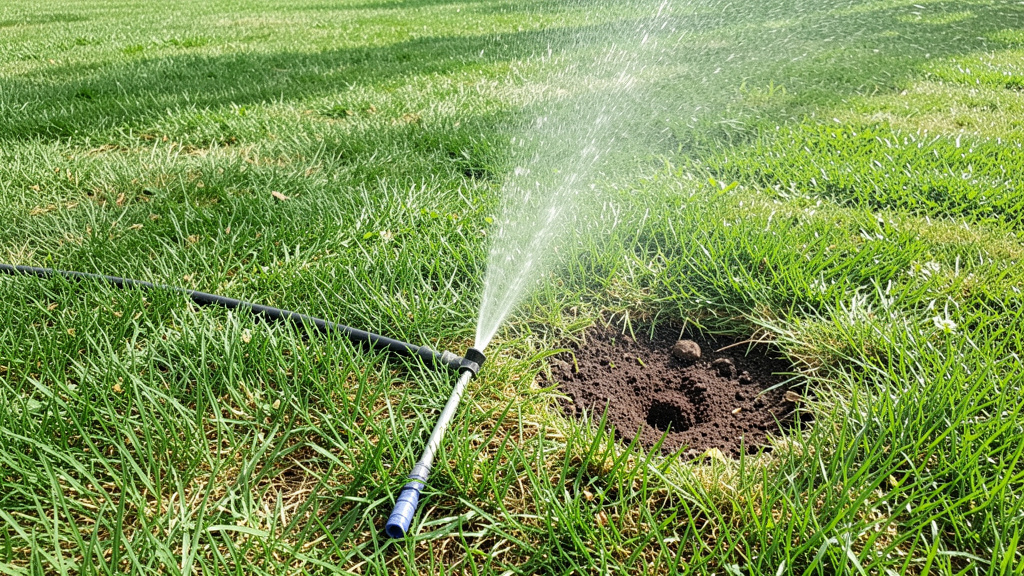
Stop guessing which grass will thrive. Follow our step-by-step framework to match your yard’s unique conditions and lifestyle—saving time, resources, and frustration.
Selecting the right grass type is among the most influential decisions for your lawn’s long-term health, resilience, and enjoyment. Yet many homeowners plant based on convenience, aesthetics alone, or neighbor recommendations—only to face patchy growth, persistent weeds, excessive water use, or repeated reseeding. This guide replaces uncertainty with clarity. Synthesizing decades of agronomic research, regional climate patterns, soil science, and real-world usage scenarios, we offer a practical, adaptable framework. Whether you’re starting fresh, renovating a struggling yard, or planning ahead, you’ll learn to observe your site critically—from microclimate nuances and soil behavior to how your household actually uses outdoor space—and match those realities to grass varieties best suited to your specific context. This isn’t about achieving an arbitrary “perfect” lawn; it’s about cultivating a resilient, satisfying green space uniquely aligned with your environment and life.
Introduction
On a typical weekend, neighborhoods hum with the familiar rhythm of lawn care: mowers rolling, hoses unspooling, bags of seed or fertilizer stacked by garage doors. Lawns serve as backdrops for childhood games, summer gatherings, quiet mornings with coffee. Yet beneath this shared ritual lies a common disconnect: grass is often chosen without considering the complex interplay of climate, soil, sun exposure, drainage, and daily use that ultimately determines success. The result? Wasted effort, unnecessary resource use, and landscapes that never reach their potential.
This guide bridges that gap. Drawing on consolidated findings from the National Turfgrass Evaluation Program (NTEP), USDA agricultural extensions across all regions, and peer-reviewed horticultural research spanning decades, we present a systematic, observation-based methodology for grass selection grounded in environmental science and practical usability. Forget generic lists or one-size-fits-all advice. Here, you’ll learn to read your yard like a professional—identifying subtle clues in soil texture, mapping seasonal sun patterns, honestly assessing usage intensity, and matching these realities to grass varieties evolved or bred for those exact conditions. This journey begins not at the garden center, but with thoughtful observation right where you stand.
The Climate-Usage Matching Framework: Your Path to a Thriving Lawn
Planting grass without analyzing your site is like building on an untested foundation. The Climate-Usage Matching Framework transforms complexity into five clear, sequential steps. Used by landscape professionals to prevent costly mismatches, this process guides you from uncertainty to confident, personalized decision-making.
Step 1: Decode Your Climate Zone—Beyond the Zip Code
Most resources mention “USDA Hardiness Zones,” but relying solely on this is incomplete. The USDA Zone reflects average annual minimum winter temperature—a critical filter for perennial survival—but overlooks summer heat intensity, humidity, rainfall distribution, frost dates, and property-specific microclimates. True climate awareness requires layering complementary systems:
USDA Plant Hardiness Zone Map (2023 Update):
Begin here. Enter your zip code on the USDA website to identify your precise zone (e.g., Zone 6b = -5°F to 0°F average annual minimum). This primarily eliminates grasses unlikely to survive your coldest nights. Important nuance: Zones were refined in the 2023 update. If using older references, verify again. Two locations sharing Zone 7a—such as Atlanta versus coastal Virginia—face different humidity, wind, and seasonal stressors not captured by USDA alone.
Sunset Climate Zones (Essential for Western & Mountain Regions):
For areas west of the Mississippi—especially California, the Pacific Northwest, Rockies, and Southwest—USDA zones lack critical detail. Sunset’s 45-zone system incorporates summer highs, marine influence, elevation, and seasonal rainfall. Example: Two properties in USDA Zone 9 could fall under Sunset Zone 14 (coastal California, fog-influenced) versus Zone 11 (Arizona high desert). Bermuda grass thrives in Zone 11 but often struggles in Zone 14’s cooler summers, where tall fescue typically performs better. Action: Locate your Sunset Zone using Sunset Magazine’s online resources or regional gardening guides. Overlooking this in western regions is a frequent cause of mismatched grass selection.
Aridity Index & Growing Degree Days (Contextual Climate Metrics):
These scientific indicators explain why similar USDA zones yield different results:
– Aridity Index: Compares annual precipitation to potential evaporation. Values below 0.5 suggest arid conditions (Southwest deserts); above 0.65 indicate humid regions (Southeast). Buffalo grass tolerates lower aridity values; St. Augustine generally requires higher moisture availability. Regional climate summaries from NOAA or university extensions provide accessible context.
– Growing Degree Days (GDD): Measures cumulative heat units above 50°F during the growing season. Cool-season grasses typically align with 1,800–2,200 GDD; warm-season types generally require 3,000+ GDD. Many university extension websites publish localized GDD trackers or seasonal summaries.
Microclimate Mapping: Your Yard’s Unique Conditions
Your entire property isn’t one uniform climate. Spend a few days observing:
– Slope Aspect: South-facing slopes receive significantly more solar radiation, warming earlier and drying faster—favoring heat-tolerant types. North slopes stay cooler and retain moisture longer, better suited for shade-adapted or cool-season varieties.
– Wind Exposure: Gaps between structures or along fences create drying winds. Deep-rooted grasses (e.g., tall fescue) handle this better than shallow-rooted types.
– Heat Radiance: Pavement, brick walls, or dark roofs create localized warmth. A shaded corner near a patio might support a cooler-adapted grass while the open yard requires heat tolerance.
– Frost Pockets: Low-lying areas can collect cold air on still nights. Marginally hardy grasses may struggle here.
Why this step matters: Assuming “I’m in the South, so Bermuda is ideal” overlooks shaded, clay-heavy yards in Zone 7b where tall fescue often outperforms. Climate decoding prevents fundamental mismatches.
Common pitfall to avoid: Using only your city’s general zone. A lakeside property may experience moderated temperatures versus an exposed hilltop just miles away. When uncertain, consult local nursery staff or extension resources familiar with hyperlocal conditions.
Step 2: Audit Your Yard’s Conditions—Soil, Sun, and Water Reality Check
Climate sets boundaries; your yard’s specific conditions determine what thrives within them. Conduct this audit over a weekend. Simple observation and low-cost tests yield powerful insights.
Soil Texture Assessment (The Ribbon Test):
Take a small handful of moist (not soggy) soil. Squeeze firmly:
– Sandy Soil: Crumbles immediately; gritty feel. Drains rapidly but holds fewer nutrients. Implication: Drought-tolerant grasses (Buffalo grass, Bermuda) often suit best. Frequent light watering may be needed initially.
– Clay Soil: Forms a tight, shiny ball; ribbon stretches 2+ inches before breaking. Drains slowly and compacts easily. Implication: Deep-rooted grasses (tall fescue, Zoysia) penetrate better. Soil amendment with organic matter is highly beneficial.
– Loam (Ideal Balance): Holds shape briefly, then crumbles; ribbon breaks at 1–2 inches. Offers balanced drainage and nutrient retention. Implication: Supports a wide range of grass types with proper preparation.
– Silty Soil: Smooth, flour-like texture. Holds moisture well but can compact. Implication: Tall fescue or fine fescues often handle compaction better than shallow-rooted types.
Soil pH Check (Critical for Nutrient Access):
An affordable pH test kit ($10–$15) reveals acidity or alkalinity. Most grasses prefer pH 6.0–7.0. Below 6.0 (acidic): Nutrient availability shifts; lime may be needed. Above 7.5 (alkaline): Iron deficiency can cause yellowing; sulfur amendment may help. Notable exceptions: Centipede grass thrives in acidic soils (pH 5.0–6.0); St. Augustine tolerates moderately alkaline conditions. Testing prevents years of struggling despite fertilizing.
Sun Exposure Mapping (Track Across Seasons):
On three clear days (ideally in late spring when tree canopies are full), sketch your yard and note direct sun duration in key zones:
– Full Sun: 6+ hours of direct sun daily (suitable for Bermuda, Zoysia, Kentucky bluegrass)
– Partial Sun/Shade: 3–6 hours (suitable for tall fescue, fine fescues, select Zoysia cultivars)
– Full Shade: Less than 3 hours of direct sun, mostly dappled light (limited grass options; fine fescues or shade-adapted Zoysia may work; groundcovers often more reliable)
Pro tip: Winter sun maps mislead! A spot sunny in January may be deeply shaded by June. Track during peak foliage season.
Drainage Observation (Simple Hole Test):
Dig a 1-foot-deep hole. Fill with water. Note drainage time:
– <4 hours: Fast drainage (sandy soils). Monitor for drought stress.
– 4–12 hours: Moderate drainage (loam). Suitable for most grasses.
– >12 hours: Slow drainage (clay, compaction). Risk of root issues. Amendment or raised planting may be needed. Avoid grasses sensitive to “wet feet” like St. Augustine.
Water Context Audit:
Review local water regulations. Many arid-region municipalities restrict turf area or encourage drought-adapted species. Note water source characteristics: Well water high in minerals may affect sensitive grasses; municipal water with treatment chemicals is generally suitable. If drought restrictions are common in your area, prioritize grasses with documented drought resilience (Buffalo grass, tall fescue, Bermuda).
Why this step matters: Two neighbors in identical climate zones can have opposite soil types. One plants Bermuda on unamended clay—it struggles. The other amends clay with compost, selects deep-rooted Zoysia, and achieves better results. Your audit reveals your reality.
Common pitfall to avoid: Skipping pH assessment. Applying fertilizer to unsuitable pH is inefficient—nutrients may remain unavailable to plants. Address pH before planting when possible.
Step 3: Define Your Lawn’s Purpose—Quantify Usage, Not Just Aesthetics
Beauty is subjective; usage is measurable. Answer these questions honestly. Your responses directly eliminate unsuitable options.
Traffic Intensity (Rate 1–10):
– 1–3 (Low): Decorative front yard, rarely traversed. Prioritize aesthetics or low-input traits.
– 4–7 (Moderate): Backyard for casual play, occasional gatherings. Needs balanced wear tolerance.
– 8–10 (High): Daily pet activity, children’s sports, frequent entertaining. Requires strong recuperative ability.
Illustrative example: A household with active dogs and regular play may need traffic rating 9. Kentucky bluegrass (moderate tolerance) could thin rapidly. Bermuda grass (high tolerance) repairs via stolons/rhizomes. Tall fescue (good tolerance) may suffice with periodic overseeding.
Aesthetic Priorities (Rank Top 3):
– Year-round green color
– Fine blade texture (carpet-like feel)
– Dense growth (natural weed suppression)
– Low mowing height preference
– Acceptance of seasonal dormancy (tan color in winter/summer)
– Reduced mowing frequency
Trade-off insight: “Fine blade texture” often conflicts with “high traffic tolerance.” Fine fescues offer delicate blades but tear under heavy use. Bermuda has coarser blades but withstands abuse. Clarify non-negotiables.
Maintenance Realism (Be Honest):
– Time: Hours per week realistically available for mowing, watering, upkeep.
– Budget: Annual investment for seed/sod, amendments, equipment, irrigation.
– Skill Level: Beginner (needs forgiving grass), Intermediate, Experienced.
– Values: Preference for native species? Minimizing water/chemical inputs?
Critical alignment point: Many desire “low maintenance” but select Kentucky bluegrass—a grass requiring consistent watering, precise mowing, and disease vigilance in humid zones. True low-maintenance alignment matches grass traits to actual commitment: Tall fescue tolerates occasional variation; Buffalo grass may need mowing only a few times yearly.
Special Considerations Checklist:
– [ ] Pets (urine impact, digging tendencies)
– [ ] Allergies (pollen sensitivity)
– [ ] Slopes requiring erosion control
– [ ] Proximity to gardens (chemical drift concerns)
– [ ] Preference for organic management
Why this step matters: A retiree seeking serene, low-upkeep space may regret high-input Zoysia requiring precise mowing and dethatching. Conversely, a young family wanting durable play space may tire of reseeding delicate fine fescue. Aligning grass traits with lifestyle prevents frustration.
Common pitfall to avoid: Overestimating future maintenance capacity. “I’ll water daily!” often fades by midsummer. Choose grasses that accommodate realistic routines.
Step 4: Cross-Reference Grass Types—The Decision Matrix
With climate, site, and usage insights gathered, consult this consolidated reference. Profiles synthesize regional extension recommendations, NTEP trial summaries, and documented performance patterns. Key insight: No grass excels in all categories. Your audit identifies which traits matter most for you.
Cool-Season Grasses (Generally suited to regions with cool winters and moderate summers; green in spring/fall, may go dormant in summer heat)
| Grass Type | Climate Context | Sun Needs | Traffic Tolerance | Drought Resilience | Mowing Height | Key Strengths | Notable Limitations |
|---|---|---|---|---|---|---|---|
| Kentucky Bluegrass | Humid cool zones (approx. Zones 3–6) | Full Sun | Moderate | Lower | 1.5–2.5″ | Self-repairs via rhizomes; dense, dark green appearance | Higher water/fertilizer needs; susceptible to heat/humidity stress; slow establishment |
| Perennial Ryegrass | Zones 3–7 | Full Sun | High | Moderate | 1.5–2.5″ | Fast germination (5–10 days); wear-resistant; often blended | Shallow roots; prone to thatch; struggles in sustained heat without irrigation |
| Fine Fescues (Creeping Red, Chewings, Hard) | Zones 3–7 | Shade to Sun | Low-Moderate | High | 2.5–4″ | Exceptional shade tolerance; low fertilizer/water needs; fine texture | Poor heat tolerance; thin under heavy traffic; slow recovery |
| Tall Fescue (Turf-Type) | Zones 3–8 (Transition Zone adaptable) | Sun to Partial Shade | High | High | 2.5–4″ | Deep roots (drought/heat tolerance); adaptable to varied soils; disease-resistant | Coarser texture than KBG; clumping growth (may require overseeding for density) |
Cool-Season Note: In the “Transition Zone” (roughly Zones 6–7, from Virginia to Missouri), cool-season grasses face significant summer stress. Turf-type tall fescue is frequently the most resilient cool-season option here due to heat/drought tolerance. Kentucky bluegrass south of Zone 6 often requires intensive irrigation and care.
Warm-Season Grasses (Generally suited to regions with hot summers; green in warm months, naturally dormant tan in cooler months)
| Grass Type | Climate Context | Sun Needs | Traffic Tolerance | Drought Resilience | Mowing Height | Key Strengths | Notable Limitations |
|---|---|---|---|---|---|---|---|
| Bermuda Grass | Zones 7–10 (full sun) | Full Sun ONLY | Very High | Very High | 0.5–1.5″ | Aggressive self-repair; heat/drought resilient; fine-textured cultivars available | Invasive potential (spreads into beds); high maintenance (frequent mowing); poor shade tolerance; produces pollen |
| Zoysia Grass | Zones 6–9 (versatile) | Sun to Partial Shade | High | High | 0.5–2″ | Dense growth (suppresses weeds); traffic-tolerant; moderate shade tolerance; lower fertilizer needs | Slow establishment (1–3 years from plugs); thatch buildup possible; extended dormancy period |
| St. Augustine Grass | Zones 8–10 (humid coasts) | Sun to Partial Shade | Moderate | Moderate | 2–4″ | Best shade tolerance among common warm-season grasses; salt-tolerant | Requires sod/plugs (no seed); higher water needs; susceptible to chinch bugs; cold sensitivity |
| Centipede Grass | Zones 7–9 (acidic soils) | Sun to Partial Shade | Low-Moderate | Moderate | 1.5–2.5″ | Low fertilizer needs; adapts to poor soils; slow growth = less mowing | Very slow recovery; requires acidic soil (pH 5.0–6.0); winterkill risk in marginal zones |
| Buffalo Grass | Zones 4–9 (arid/semi-arid) | Full Sun | Low | Very High | 2–3″ (or unmowed) | Native to North American plains; very low water needs; low mowing frequency; pollen-free options | Slow establishment; poor traffic tolerance; requires full sun; limited regional availability |
Warm-Season Note: Dormancy is a natural, protective state. Warm-season grasses turn tan when soil temperatures consistently drop below approximately 55°F. This is not failure—it’s survival. Avoid “winter overseeding” with ryegrass unless you accept the added maintenance (extra mowing, water, potential competition) and understand it’s temporary.
Transition Zone Strategies: Thoughtful Blending & Zoning
For USDA Zones 6–7 (the volatile band from North Carolina through Missouri), single-grass solutions often face challenges. Professionals commonly use:
– Tall Fescue Dominant Blend: Primarily turf-type tall fescue, sometimes with a small percentage of Kentucky bluegrass for spring/fall density. Fescue handles summer stress; KBG contributes in cooler seasons.
– Zoysia as Primary: Cold-tolerant cultivars (e.g., ‘Meyer’, ‘Zeon’) can succeed in Zone 6 with protective snow cover. Accept a longer dormancy period (tan color from late fall to late spring).
– Functional Zoning: Plant Zoysia in full-sun zones; tall fescue in partially shaded areas. Creates purpose-driven sections.
– Alternative Groundcovers: For deeply shaded or erosion-prone slopes: Mondo grass (zones 6–10), Liriope, or native sedges. Not traditional lawn, but low-maintenance solutions where grass struggles.
The Fundamental Principle: The right grass isn’t the one with the most perfect traits on paper—it’s the one whose weaknesses align with conditions you can manage, and whose strengths solve your most pressing challenges. If your audit revealed “clay soil + partial shade + moderate pet traffic,” tall fescue’s deep roots (for clay), shade adaptability, and wear tolerance may make it more suitable than Kentucky bluegrass, which could struggle under those specific stresses.
Step 5: Validate with a Small-Scale Trial—Before Full Commitment
Never commit your entire yard based solely on research. A small trial patch provides invaluable, site-specific insight:
1. Source Small Quantities: Obtain a small amount of seed or one plug/sod piece for your top 1–2 grass candidates.
2. Prepare Identical Test Areas: Choose two 2’x2′ spots reflecting your yard’s most challenging conditions (e.g., partial shade edge, compacted soil area).
3. Plant & Maintain Consistently: Follow establishment guidelines precisely. Water identically.
4. Observe Diligently: Track for 4–8 weeks:
– Germination speed and uniformity
– Color retention during temperature fluctuations
– Recovery after light simulated traffic
– Weed competition
– Pest or disease signs
Why this step matters: Seed bag descriptions can be optimistic. A “shade-tolerant” cultivar might still struggle under your specific tree canopy. A trial reveals reality. One documented case in the Southeast involved a homeowner testing Zoysia versus tall fescue in a shaded backyard corner. After several weeks, the Zoysia remained sparse while the tall fescue thrived—saving significant time, cost, and disappointment on a full-yard install.
Common pitfall to avoid: Testing only in ideal conditions. Place patches where your lawn typically struggles most. Success there builds confidence for broader application.
Deep Dive: Cool-Season Grasses for Northern and Transition Climates
Kentucky Bluegrass: The Classic Choice—Context Matters
Kentucky bluegrass (Poa pratensis) embodies the traditional lush, dense lawn aesthetic in suitable regions. Its rhizomes (underground stems) enable self-repair of minor damage. In cool, humid regions (approximately USDA Zones 3–5), it delivers exceptional beauty and function. Cultivars like ‘Midnight’ offer deep color; ‘Award’ provides documented disease resistance.
Where It Excels: North-facing yards in Zone 5 with loamy soil, full sun, moderate use, and reliable water access. Spring and fall bring vigorous growth; summer dormancy is typically brief with adequate moisture. Mowed at 2.5″, it forms a resilient surface.
Where Challenges Arise: South of Zone 6, summer heat and humidity increase stress. Without consistent irrigation and care, issues may include:
– Summer Patch: Fungal disease favored by heat and moisture.
– Heat Stress: Reduced photosynthesis during prolonged high temperatures.
– Thatch Accumulation: Requires periodic management.
Documented insight: University extension case studies note that in marginal zones (e.g., Zone 6b), blending Kentucky bluegrass with heat-tolerant tall fescue often improves overall resilience compared to pure stands.
Establishment Considerations:
– Soil Prep: Target pH 6.0–7.0. Incorporating compost improves soil structure.
– Seeding: Mix with perennial ryegrass (≤20% of blend) for quicker initial cover while KBG establishes (germinates in 14–21 days).
– Watering: Keep surface moist until germination. Transition to deep, infrequent watering to encourage roots.
– Mowing: First cut at 3″; never remove more than one-third of blade height. Avoid cutting below 1.5″.
– Fertilizing: Fall application is most critical for root development. Spring feeding supports green-up.
Consider Choosing It If: You reside north of Zone 6, have well-drained soil, full sun, reliable water access, desire a traditional dense lawn for moderate use, and commit to seasonal care (aeration, fall fertilization).
Consider Alternatives If: South of Zone 6 without irrigation capability; significant shade; high-traffic zones with pets/children; low-maintenance goals; alkaline soils without amendment plans.
Perennial Ryegrass: Rapid Establishment—Strategic Use
Perennial ryegrass (Lolium perenne) germinates quickly (5–10 days), providing fast cover and erosion control. Its dark green color and fine blades offer immediate visual appeal. Often used as a “nurse crop” blended with slower-establishing grasses (≤20% of mix).
Ideal Applications: Overseeding thin cool-season lawns in early fall; temporary cover on slopes during establishment of primary grass; sports fields in cool climates needing rapid repair.
Important Limitations:
– Shallow Roots: Less drought resilient than deep-rooted grasses like tall fescue.
– Thatch Potential: Dense growth may require periodic dethatching.
– Heat Sensitivity: Declines rapidly in sustained high heat without irrigation. Not recommended as a standalone grass south of Zone 6.
– Allelopathy: Releases compounds that may inhibit germination of other grass seeds—relevant if future overseeding is planned.
Documented insight: Research from Midwestern university extensions shows blends of 80% turf-type tall fescue + 20% perennial ryegrass often outperform 100% ryegrass in high-traffic settings over multiple seasons, with reduced watering needs.
Key Tip: Select “turf-type” perennial ryegrass cultivars (e.g., ‘Premier’, ‘Allstar’), bred for finer texture and density, over “pasture-type” varieties.
Fine Fescues: Masters of Shade and Low Inputs
Fine fescues encompass several species: Creeping Red (Festuca rubra), Chewings (F. rubra subsp. commutata), Hard (F. brevipila), and Sheep Fescue (F. ovina). United by fine blades, low growth habit, and exceptional shade tolerance, they solve challenges where other grasses falter.
Where They Excel: North-facing yards under mature trees with dappled shade; sandy or acidic soils; low-maintenance priorities; water-conscious landscapes. A blend thrives with minimal inputs—mowed only a few times yearly at 3.5″.
Strengths:
– Shade Adaptation: Tolerates as little as 2–3 hours of direct sun. Creeping Red spreads to fill gaps; Chewings forms dense clumps.
– Drought Resilience: Deep roots access moisture; recovers well from dormancy.
– Low Fertility Needs: Requires less nitrogen than Kentucky bluegrass.
– Acid Soil Compatibility: Thrives where pH is 5.5–6.5.
Management Considerations:
– Traffic Sensitivity: Wears thin under heavy use. Best for ornamental areas, pathways, or woodland edges.
– Heat Vulnerability: In Zones 6+, prolonged heat/humidity requires excellent drainage.
– Establishment Patience: Takes a full season to thicken fully.
Documented insight: Pacific Northwest extension resources highlight success using Hard Fescue and Creeping Red blends in shaded, acidic sites where traditional turf failed, with minimal seasonal inputs.
Selection Guidance:
– Creeping Red: Best for partial shade with some sun exposure; spreads to repair.
– Chewings: Superior for dense shade; forms tight bunches.
– Hard Fescue: Most drought/heat tolerant within the group; ideal for sunny, dry slopes in northern zones.
– Sheep Fescue: Naturalistic look; often used in unmowed eco-lawns.
Consider Choosing a Blend If: Significant shade covers >50% of yard; low-maintenance is a priority; sandy or acidic soils exist; water conservation is important; naturalistic aesthetic is preferred.
Consider Alternatives If: Full sun in hot climates; high-traffic areas; desire for uniform “carpet” texture; alkaline soils (pH >7.0).
Tall Fescue: The Adaptable Workhorse
Modern turf-type tall fescue (Festuca arundinacea) has evolved significantly. Cultivars like ‘Barlexas’, ‘Titanium’, and ‘Justice’ feature finer blades, darker color, and denser growth than older varieties. Its deep, fibrous root system (often 2+ feet) provides exceptional adaptability.
Where It Excels: Transition Zone properties (Zones 6–7) with clay soil, partial shade, moderate traffic, and water awareness. Handles summer heat better than Kentucky bluegrass, tolerates varied soils with preparation, withstands play, and survives drought via deep roots. Mowed at 3″, it maintains density with manageable thatch.
Why It Bridges Climates: Between reliable northern cool and southern warmth lies the volatile Transition Zone. Here:
– Kentucky bluegrass battles summer stress.
– Bermuda grass battles winter cold.
– Tall fescue offers a resilient middle path:
– Heat Tolerance: Maintains function at higher temperatures than KBG.
– Cold Hardiness: Survives Zone 5 winters with snow cover; newer cultivars extend range.
– Soil Flexibility: Adapts to clay, loam, and sandy soils with preparation. Tolerates a wider pH range.
– Disease Resistance: Naturally resistant to several common turf diseases.
Documented insight: University trials in the Mid-South consistently show turf-type tall fescue maintaining significantly higher green cover through summer heat stress compared to Kentucky bluegrass under identical water regimes.
Establishment & Care Guidelines:
– Soil Prep: Critical for clay soils. Core aeration and compost incorporation improve results.
– Seeding Rate: 6–8 lbs per 1,000 sq ft (higher than KBG due to bunching growth).
– Watering: Deep, infrequent watering encourages deep roots. Adjust based on rainfall and soil.
– Mowing: Never below 2.5″. Ideal height 3–3.5″. Sharp blades prevent tearing.
– Fertilizing: Moderate needs: 2–3 lbs nitrogen per 1,000 sq ft yearly. Fall application is most valuable.
– Overseeding: Periodic overseeding (every 2–3 years) maintains density due to bunching habit.
Addressing Texture: Modern turf-types are notably finer than legacy varieties. Mowing height influences perception: At 3.5″, blades bend, creating a softer visual texture. For ultra-fine preference in low-traffic zones, a small percentage of fine fescue may be blended.
Consider Choosing It If: You live in the Transition Zone; have variable soils (especially clay); experience partial shade; need traffic tolerance; prioritize water conservation; seek disease resilience. Often the most versatile cool-season choice for modern landscapes.
Consider Alternatives If: Desire for ultra-fine “golf course” texture at very low heights (<2″); deeply shaded sites (choose fine fescues); regions with reliably cool summers where KBG thrives effortlessly with less input.
Deep Dive: Warm-Season Grasses for Southern and Arid Climates
Bermuda Grass: High Performance—High Commitment
Bermuda grass (Cynodon dactylon) delivers unmatched wear tolerance and recuperative ability in full sun. Thriving across USDA Zones 7–10, it forms dense turf via vigorous stolons and rhizomes. From athletic fields to residential lawns in the Sun Belt, its resilience is well-documented.
Where It Excels: South-facing yards in Zone 8+ with full sun, well-drained soil, irrigation access, and high activity levels. Hybrid cultivars (e.g., ‘Tifway 419’, ‘Latitude 36’) establish via sod/plugs, offering finer texture and denser growth than common seeded types.
Maintenance Realities:
– Mowing: During peak growth, frequent mowing (every 4–7 days) is essential. Reel mowers preferred for heights under 1.5″.
– Watering: Deep, infrequent watering encourages deep roots. Adjust based on rainfall and soil.
– Fertilizing: Moderate to high nitrogen needs, split across the growing season. Iron supplements may enhance color in alkaline soils.
– Dethatching: Aggressive growth can lead to thatch; periodic removal may be needed.
– Dormancy: Turns tan when soil cools (typically late fall to early spring). This is natural. Overseeding with ryegrass adds significant maintenance.
Critical Considerations:
– Invasiveness: Stolons spread into beds and hardscapes. Deep edging (6+ inches) and regular edge trimming are necessary.
– Allergies: Produces pollen in late spring. Consider alternatives for severe grass pollen allergies.
– Shade Intolerance: Requires minimum 6–8 hours direct sun. Under dense canopy, it becomes thin and vulnerable. Solution: Prune for filtered light or select a more shade-tolerant grass.
Documented insight: Southwestern extension resources note that pairing hybrid Bermuda with deep edging and iron supplementation in alkaline soils significantly improves longevity and appearance while reducing water needs compared to less-adapted varieties.
Consider Choosing Hybrid Bermuda If: Full sun site; high-traffic area (pets, sports); warm climate with irrigation access; commitment to frequent mowing and precise care; desire for dense, fine-textured turf.
Consider Alternatives If: Shaded yard; low-maintenance goals; allergy concerns; short growing seasons (Zone 7); budget constraints for sod/plugs and equipment.
Zoysia Grass: The Balanced Compromise
Zoysia (Zoysia spp.) offers remarkable versatility: wear tolerance approaching Bermuda, greater shade adaptability, softer texture, and lower long-term inputs. Its dense growth naturally suppresses weeds. While slower to establish, its durability rewards patience across USDA Zones 6–9.
Understanding Types:
– Zoysia japonica (e.g., ‘Meyer’, ‘El Toro’): Coarser blades, faster spread, better cold tolerance (Zone 6). Tolerates moderate shade.
– Zoysia matrella (e.g., ‘Zeon’, ‘Geo’): Finer blades, darker green, slower growth. Superior shade tolerance (thrives with 4–6 hours sun). Best in Zone 7+.
– Zoysia tenuifolia (‘Emerald’): Very fine blades, slowest grower. Primarily ornamental; not traffic-tolerant.
Where It Excels: Yards in Zone 7 with partial shade from mature trees, moderate family use, and desire for reduced chemical inputs. Planted as plugs in spring, it fills steadily. By year three, it forms a dense, weed-resistant turf mowed every 7–14 days at 1.5″, requiring minimal fertilizer and water once established.
Establishment Realities:
Patience is key. Establishment speed depends on method, climate, and care:
– Sod: Establishes within one growing season. Highest initial investment.
– Plugs: Planted 6–12″ apart in late spring (soil >70°F). Takes 1–3 years to fill. Cost-effective. Tip: Water consistently the first month; hand-pull weeds aggressively early on.
– Seed: Only viable for select Z. japonica types. Challenging for beginners; sod/plugs preferred.
Long-Term Advantages Over Bermuda:
– Mowing: Less frequent—every 7–14 days at 1–2″ height.
– Watering: Deep roots access moisture; typically requires less water than Bermuda once established.
– Fertilizing: Lower needs: 2–3 lbs nitrogen per 1,000 sq ft yearly. Over-fertilizing encourages thatch.
– Weed Suppression: Dense canopy shades soil, reducing weed germination.
– Thatch: Builds slower than Bermuda but may require periodic management.
Navigating Dormancy: Zoysia enters dormancy earlier in fall and greens later in spring than Bermuda. Perspectives:
– Accept the natural cycle—many appreciate the warm tan winter hue.
– Overseed lightly with perennial ryegrass in early fall for temporary green (adds maintenance).
– Prioritize sunniest yard areas to maximize active growth season.
Documented insight: Southeastern extension case studies document successful Zoysia establishment on amended clay soils under partial tree canopy, resulting in dense, low-weed turf with significantly reduced irrigation and fertilizer needs compared to previous St. Augustine lawns.
Consider Choosing Zoysia If: Partial shade sites; desire for lower long-term maintenance; traffic tolerance needed; water conservation priorities; Transition Zone residency seeking warm-season benefits with cold tolerance. Often the most versatile warm-season choice for residential use.
Consider Alternatives If: Need for immediate full coverage; very high traffic requiring fastest repair (Bermuda may recover quicker); budgets requiring seed-only establishment; intolerance for extended winter dormancy.
St. Augustine Grass: Coastal and Shade Specialist
St. Augustine (Stenotaphrum secundatum) dominates humid, coastal southern landscapes (USDA Zones 8–10). Its broad blades form a thick, cushiony sod tolerant of shade, salt spray, and sandy soils. From Florida to the Gulf Coast, it defines relaxed southern aesthetics.
Where It Excels: Waterfront properties in Zone 9 with partial shade from palms, sandy soil, humidity, and salt exposure. Planted as sod, it thrives with moderate inputs, maintains density under tree canopy, and resists salt damage. Mowed at 3″, it creates a comfortable, resilient surface.
Cultivar Selection Matters:
– ‘Floratam’: Industry standard. Good heat/drought tolerance. Resistant to St. Augustine Decline virus. Less cold tolerant; susceptible to chinch bugs.
– ‘Palmetto’: Finer texture, better shade tolerance, improved cold hardiness (Zone 8b). More chinch bug resistant. Slower grower.
– ‘Seville’: Dwarf type. Dark green, fine blades. Tolerates lower mowing. Less cold tolerant.
– ‘Raleigh’: Best cold tolerance (Zone 8a). Blue-green color. Slower growth.
Non-Negotiable Constraints:
– No Seed Option: Must be installed via sod or plugs.
– Shade Tolerance ≠ Full Shade: Requires minimum 3–4 hours of direct sun. Under dense canopy, it thins. Solution: Prune for filtered light; select ‘Palmetto’ for best shade performance.
– Water Sensitivity: Prefers consistent moisture but requires good drainage. Sandy soils ideal; amend clay heavily.
– Chinch Bug Awareness: These pests cause yellow patches, especially in hot, dry conditions near hardscapes. Prevention: Avoid over-fertilizing; water deeply; choose resistant cultivars; monitor edges in summer.
Care Guidelines:
– Mowing: Height is critical. Never cut below 2.5″. Ideal range: 2.5–4″ depending on cultivar and shade. Sharpen mower blades regularly.
– Watering: Approximately 1″ per week, preferably in one deep session early morning.
– Fertilizing: Moderate needs: 2–4 lbs nitrogen per 1,000 sq ft yearly, split applications. Avoid late-summer feeding. Iron supplements may enhance color in alkaline soils.
– Thatch: Builds slowly but may require management every few years if mowed too high or over-fertilized.
Documented insight: Gulf Coast extension resources emphasize soil amendment and cultivar selection (e.g., ‘Palmetto’ for shade) as key factors in St. Augustine success on challenging sites, significantly reducing pest issues and irrigation needs.
Consider Choosing St. Augustine If: Humid coastal climate; sandy soils; partial shade conditions; salt exposure; desire for low-maintenance, soft-textured turf in warm zones. Top choice for southern homeowners prioritizing shade tolerance.
Consider Alternatives If: Arid inland regions (Arizona, Nevada); full sun with no irrigation; cold climates north of Zone 8a; budgets requiring seed; high-traffic zones needing rapid repair (Zoysia/Bermuda may be better).
Centipede Grass: The Low-Input Specialist
Centipede grass (Eremochloa ophiuroides) thrives on minimal inputs. Naturalized across the Southeast (Zones 7–9), it requires little fertilizer, tolerates poor soils, and grows slowly—reducing mowing frequency. Its light apple-green color offers a distinctive, relaxed aesthetic.
Where It Excels: Low-traffic yards in Zone 8 with acidic, sandy soil (pH 5.5), partial sun, and a homeowner seeking minimal upkeep. Established sod requires infrequent mowing (every 10–14 days at 1.5–2″), one light annual fertilizer application, and watering only during severe drought. Dense growth habit suppresses weeds.
The Acid Soil Requirement: Centipede requires acidic conditions (pH 5.0–6.0). In neutral or alkaline soils (pH >6.5):
– Iron becomes less available, causing yellowing.
– Overall vigor declines, inviting weeds and disease.
Soil Management:
If pH >6.0: Elemental sulfur application (per soil test recommendations) in fall may help. Retest in spring. Never apply lime. Use fertilizers formulated for acid-loving plants.
Growth Characteristics & Considerations:
– Slow Establishment: Takes 1–2 years to fill from sod; longer from plugs. Patience required.
– Low Traffic Tolerance: Wears thin under heavy use. Best for ornamental lawns, slopes, or low-traffic zones.
– Cold Sensitivity: Marginal in Zone 7. Winterkill risk increases with exposure, poor drainage, or late-season fertilizing. Protection: Avoid nitrogen after August; ensure drainage; select protected microclimates.
– “Centipede Decline”: A complex issue causing patch die-off. Contributing factors include over-fertilizing, thatch buildup, drought stress, or pH imbalance. Prevention: Stick to low-fertility program; maintain pH; water deeply during drought.
Fertilization Philosophy: Less is more. Apply only 0.5–1 lb of nitrogen per 1,000 sq ft yearly—typically a single application in late spring after green-up. Over-fertilizing causes thatch, disease susceptibility, and winter vulnerability.
Documented insight: Southeastern extension case studies highlight successful Centipede lawns on acidic, sloped properties with minimal inputs, contrasting with higher-maintenance Bermuda lawns nearby requiring frequent care.
Consider Choosing Centipede If: Acidic soils (pH 5.0–6.0); low-maintenance priority; low-traffic areas; water restrictions; distinctive light-green aesthetic; southeastern U.S. residency.
Consider Alternatives If: Alkaline soils without amendment capability; high-traffic zones; full sun in arid climates; cold climates (Zone 7 requires microclimate protection); desire for dark green color or fine texture.
Buffalo Grass: The Sustainable Native Choice
Buffalo grass (Bouteloua dactyloides) is North America’s only native turfgrass, evolved across the Great Plains. In water-conscious landscapes (USDA Zones 4–9), its grey-green blades, drought resilience, and low growth habit offer an ecologically aligned solution.
Where It Excels: Xeriscape yards in Zone 6+ with full sun, well-drained soil, and water restrictions. Modern cultivars like ‘UC Verde’ establish via plugs, forming a dense turf mowed only 3–4 times yearly at 2–3″, or left unmowed as a natural meadow. Requires significantly less water than traditional turf. Female-only cultivars (e.g., ‘Legacy’) produce no pollen.
Cultivar Progress:
Traditional Buffalo grass was too sparse for lawns. Modern types transformed its potential:
– ‘UC Verde’: Fine texture, dark green (for Buffalo), rapid spread. Tolerates light traffic. Best availability in Western states.
– ‘Legacy’: Female-only (pollen-free). Requires plugs.
– ‘Prairie’/‘609’: Older types; slower establishment.
Establishment Approach:
Patience yields long-term rewards:
– Plugs: Plant on 12″ centers in late spring after soil warms. Water consistently the first month, then taper. Full coverage in 1–2 years. Critical: Control weeds diligently during establishment.
– Seed: Only viable for older cultivars; erratic germination. Not recommended for beginners.
– Sod: Limited availability; check specialty nurseries in Western regions.
Low-Input Maintenance:
– Mowing: Optional. For manicured look: mow every 2–3 weeks at 2–3″ during peak growth. For natural look: mow once in late spring. Never cut below 2″.
– Watering: Once established, survives on rainfall in many regions. During severe drought, occasional deep watering maintains dormancy viability. Overwatering encourages weeds.
– Fertilizing: Minimal needs. One light application in early summer is often sufficient.
– Weed Control: Initial establishment requires weeding. Mature stands suppress weeds naturally.
Environmental Benefits:
– Water Conservation: Uses substantially less water than traditional turf. May qualify for municipal rebate programs.
– Pollen-Free Options: Female-only cultivars ideal for allergy sufferers.
– Erosion Control: Deep roots stabilize slopes.
– Wildlife Value: Supports native pollinators when allowed to flower.
Documented insight: Municipal case studies in the Southwest document successful Buffalo grass adoption in public spaces, resulting in dramatic water savings, reduced mowing frequency, and high public acceptance due to its soft, natural appearance.
Consider Choosing Buffalo Grass If: Arid/semi-arid climate; water conservation priority; full sun site; low-maintenance goals; allergy concerns (female cultivars); slopes needing erosion control; desire for native, ecologically supportive landscaping.
Consider Alternatives If: High-rainfall humid regions; shade; high-traffic areas; desire for lush green year-round (goes dormant in drought/cold); limited cultivar availability or budget constraints.
Navigating the Transition Zone: Strategic Solutions for Challenging Climates
The Transition Zone—a band spanning roughly USDA Zones 6–7 from the Carolinas through Missouri—presents unique challenges. Winters can be too cold for reliable warm-season grass survival; summers too hot and humid for cool-season grasses without intensive care. However, strategic approaches yield resilient results.
Why Single Solutions Often Struggle Here:
– Cool-Season Grasses (KBG, Ryegrass): Face summer heat stress, disease pressure, and drought without significant irrigation.
– Warm-Season Grasses (Bermuda, Zoysia): Risk winter injury during harsh freezes, especially without snow cover. Dormancy period may feel long.
Proven Strategies for Success:
Strategy 1: Turf-Type Tall Fescue as Primary
Modern turf-type tall fescue is the most widely recommended cool-season option for the Transition Zone. Its deep roots access moisture during summer; heat tolerance exceeds KBG; cold hardiness covers Zone 6.
– Top Cultivars: ‘Mustang IV’, ‘Titanium’, ‘Barlexas’, ‘Justice’.
– Protocol: Plant in early fall. Mow at 3–3.5″. Moderate fertilization (2–3 lbs N/year). Core aerate annually. Overseed every 2–3 years to maintain density.
– Limitation: May appear slightly coarser than KBG; can thin in dense shade (consider blending with fine fescue).
Strategy 2: Cold-Hardy Zoysia as Primary
For accepting extended dormancy (tan color late fall to late spring), cold-tolerant Zoysia offers warm-season benefits with improved winter survival.
– Top Cultivars: ‘Meyer’ (Zoysia japonica), ‘Zeon’ (Zoysia matrella—Zone 7+).
– Protocol: Plant sod/plugs in late spring after soil warms. Mow at 1.5–2″. Light fertilization (1–2 lbs N/year). Accept dormancy or lightly overseed with ryegrass for winter color (adds maintenance).
– Limitation: Slow establishment; longer dormancy than Bermuda.
Strategy 3: Functional Zoning
Map your yard’s microclimates and plant accordingly:
– South-Facing Slopes (Hotter): Zoysia or tall fescue.
– North-Facing Slopes (Cooler): Tall fescue or fine fescue blend.
– Protected Courtyards: Kentucky bluegrass may succeed with irrigation.
– High-Traffic Zones: Tall fescue for resilience.
Documented insight: Landscape professionals in Nashville (Zone 7a) report consistent success using functional zoning: Zoysia in full-sun front yards, tall fescue in partially shaded side yards, and fine fescue/groundcover blends in deeply shaded corners—resulting in resilient, low-friction landscapes tailored to each micro-environment.
Critical Transition Zone Practices to Embrace:
– Prioritize soil preparation (amend clay heavily with compost).
– Select cultivars documented for your specific zone by university extensions.
– Accept that no single grass is perfect; success lies in intelligent matching.
– Core aerate annually to relieve compaction and improve water infiltration.
Mindset Shift: The Transition Zone rewards thoughtful planning. There is no universal “best” grass—only the best match for your yard’s specific conditions and your household’s needs. This intentional approach cultivates a landscape that reflects your property’s unique character.
Special Scenarios: Addressing Common Lawn Challenges
Conquering Shade: Beyond the Label
Shade exists on a spectrum. Matching solutions to shade type is critical:
– Dense Shade: <2 hours direct sun (under thick-canopied trees). Few grasses persist long-term. Solution: Embrace non-grass groundcovers (Mondo grass, Liriope, Ajuga) or mulched beds. Consult an arborist about selective pruning for “high shade” (dappled light).
– Moderate Shade: 2–4 hours direct sun. Solution: Fine fescues (Chewings, Hard) in cool zones; Zoysia ‘Zeon’ or St. Augustine ‘Palmetto’ in warm zones.
– Light Shade: 4–6 hours direct sun. Solution: Tall fescue (cool zones); Zoysia or St. Augustine (warm zones).
Managing Tree Competition:
Trees and grass compete for water and nutrients. Mitigation strategies:
– Vertical Mulching: Drill holes around the tree drip line; fill with compost to reduce root competition.
– Targeted Irrigation: Use soaker hoses or drip lines specifically for the lawn area under trees, on a separate timer from tree watering.
– Soil Amendment: Incorporate compost to improve moisture retention in the root zone.
– Professional Pruning: Hire a certified arborist for crown raising or thinning to allow filtered light. Avoid harmful “topping.”
Documented insight: Pacific Northwest extension resources document successful fine fescue establishment under conifers after soil pH adjustment (to 6.0), core aeration, and installation of targeted drip irrigation—transforming previously bare areas into functional green space.
Building Drought Resilience: A Proactive Approach
Water-conscious lawns start with strategy, not just conservation tactics:
– Grass Selection: Prioritize deep-rooted, documented drought-resilient varieties: Tall fescue, Buffalo grass, Bermuda, Zoysia. Avoid high-water grasses like Kentucky bluegrass in arid zones.
– Soil Preparation: Amend with 3–4″ compost before planting. Increases water retention significantly. Add coconut coir for sandy soils.
– Irrigation Efficiency:
– Smart Controllers: Weather- or soil moisture-based timers adjust watering automatically.
– Cycle & Soak: Short watering cycles with breaks prevent runoff on slopes.
– Drip Zones: Subsurface drip irrigation delivers water directly to roots with minimal evaporation.
– Mowing Height: Raise mower deck during dry periods. Taller grass shades soil, reducing evaporation and encouraging deeper roots.
– Grasscycling: Leave clippings on lawn. Returns moisture and nutrients; reduces fertilizer needs.
Documented insight: California extension case studies show properties replacing high-water turf with Buffalo grass or tall fescue, combined with soil amendment and smart irrigation, achieving 60–80% water reduction while maintaining functional green space—often qualifying for municipal rebate programs.
Engineering for High-Traffic Zones
Diagnose the specific stressor:
– Foot Traffic Paths: Creates soil compaction. Solution: Install stepping stones, gravel paths, or permeable pavers. For grass paths, use wear-tolerant grasses (Bermuda, tall fescue) and aerate annually.
– Pet Traffic (Urine Spots): Nitrogen concentration causes discoloration. Solution: Immediately drench the spot with water to dilute. Designate a mulched or gravel relief area. Overseed thin spots with the same grass type. Note: No grass is “urine-proof”; dilution and training are key.
– Play Areas: Requires aggressive recuperation. Solution: Bermuda grass (warm zones) or turf-type tall fescue (cool/transition zones). Annual fall overseeding maintains density. Avoid fine fescues or Centipede.
Reinforcement Techniques:
– Observe Patterns: Redirect persistent wear paths with landscaping (low shrubs, boulders) or permanent pathways.
– Aeration: Core aerate high-traffic zones twice yearly (spring/fall) to relieve compaction.
– Topdressing: After aeration, apply a thin layer of compost to smooth surfaces and introduce beneficial microbes.
– Strategic Overseeding: For cool-season lawns, overseed high-traffic zones each fall with a blend suited to wear.
Documented insight: Midwestern extension resources note that combining traffic-path redirection (stepping stones), annual aeration, and overseeding with turf-type tall fescue significantly reduced bare patches in family yards compared to grass-only solutions.
Pet-Friendly Lawn Practices
Pets enrich our lives; thoughtful planning minimizes lawn impact:
– Grass Selection: Prioritize wear tolerance and recuperation: Bermuda (warm zones), tall fescue (cool zones). Avoid delicate fine fescues.
– Urine Management:
– Immediate Dilution: Keep a hose or bucket near common exit points. Drench spot promptly.
– Designated Zone: Create a mulched or gravel area with a visual cue (e.g., fire hydrant ornament). Consistent training encourages use.
– Hydration: Ensure pets drink adequate water; well-hydrated urine is less concentrated. Consult your vet before making dietary changes.
– Digging Prevention: Bury chicken wire 2″ under soil in favorite spots. Provide a dedicated sandbox with buried toys.
– Product Safety: If using any lawn products, choose those labeled pet-safe. Keep pets off treated areas until dry (follow label instructions precisely).
Important Clarification: Urine impact correlates with concentration (hydration level), not pet gender. Well-hydrated pets of any gender cause less damage.
The Unseen Foundation: Soil Preparation Mastery
Soil is a living ecosystem. Investing effort here yields disproportionate long-term benefits. Skipping preparation guarantees ongoing challenges, regardless of grass choice.
Soil Preparation Protocol (New Lawns):
1. Clear & Grade: Remove debris, rocks, weeds. Grade soil to slope gently away from structures (1–2% slope for drainage).
2. Test Thoughtfully: Submit a sample to a lab (often via extension office). Test pH, major nutrients, organic matter, texture. Cost: Modest. Value: Prevents years of guesswork.
3. Amend Based on Results:
– Clay Soil: Incorporate 3–4″ compost + consider gypsum (per soil test) to improve structure. Avoid fine sand—it can worsen compaction.
– Sandy Soil: Incorporate 3″ compost + coconut coir to boost water and nutrient retention.
– Low Organic Matter (<3%): Add compost until organic matter reaches approximately 5%.
– pH Adjustment: Apply lime (to raise pH) or sulfur (to lower pH) per test recommendations. Work into top 6″.
4. Till Thoughtfully: Rototill amendments to 6–8″ depth only if soil is severely compacted. Excessive tilling can disrupt soil structure.
5. Final Grade: Rake smooth. Lightly roll with a water-filled drum roller to firm soil (should indent slightly under foot).
6. Pre-Plant Nutrition: Apply a starter fertilizer (higher in phosphorus) per label instructions. Rake lightly into top inch.
7. Rest Period: Wait 1–2 weeks before planting. Allows soil to settle; reveals low spots needing fill.
Renovation Protocol (Existing Lawns):
– Core Aeration: Rent an aerator; make two passes in perpendicular directions. Removes soil plugs.
– Topdressing: Spread a ¼” layer of compost over the entire lawn. Drag a mat or rake to work it into aeration holes.
– Overseeding: Use a slit seeder for optimal seed-to-soil contact.
– pH Adjustment: Apply lime or sulfur after aeration so it reaches the root zone.
Documented insight: Texas A&M extension case studies show lawns established on properly amended clay soil (4″ compost incorporated) developed root systems penetrating over 18″ deep within two years, surviving severe drought conditions that damaged neighboring unamended lawns.
Organic Matter: The Cornerstone Amendment
Compost is the single most impactful soil amendment for most lawns. Benefits include:
– Improves water retention in sand; drainage in clay
– Feeds beneficial soil microbes and earthworms
– Buffers pH extremes
– Releases nutrients slowly and steadily
Sources: Municipal compost facilities (often low-cost), well-aged mushroom compost (rinse first), or homemade compost. Avoid generic “topsoil” bags—they may contain low-quality fill.
Planting Methods Decoded: Seed, Sod, or Plugs?
Your choice impacts establishment time, cost, weed risk, and long-term density. Match the method to grass type, site conditions, budget, and patience.
Seeding: Cost-Effective Establishment
Best Suited For: Cool-season grasses (KBG, ryegrass, fescues); large areas; budget-conscious projects; slopes (with erosion control).
Less Suitable For: Warm-season grasses that don’t produce viable seed (St. Augustine, most Zoysia/Bermuda hybrids); situations requiring immediate use.
Key Protocol:
– Timing: Cool-season grasses: Early fall (soil 60–70°F). Warm-season seed (rare): Late spring after soil warms (>70°F).
– Seed Quality: Purchase certified seed with low weed seed content (<0.5%). Check “pure live seed” (PLS) percentage—higher is better.
– Rate: Follow recommendations for your specific grass type and purpose. Under-seeding invites weeds; over-seeding causes competition.
– Soil Contact: Use a slit seeder or rake seed lightly into soil. Roll gently to ensure contact.
– Erosion Control: Apply straw (not hay—contains weeds) or biodegradable erosion blanket on slopes.
– Watering: Mist 2–3 times daily to keep surface moist until germination. Gradually transition to deeper, less frequent watering after first mow.
Common Challenge: Seed washed away or eaten by birds. Solution: Light raking after sowing; temporary bird netting if needed.
Sodding: Instant Results, Higher Investment
Best Suited For: Warm-season grasses (Bermuda, Zoysia, St. Augustine); situations needing immediate erosion control or use; precise cultivar selection.
*Less Suitable For: Very tight budgets; highly irregular yard shapes (increases waste); unprepared soil (sod fails on poor foundations).
Key Protocol:
– Timing: Cool-season sod: Early fall or spring. Warm-season sod: Late spring to early summer (allows root establishment before peak heat).
– Soil Prep: Non-negotiable. Follow full soil preparation protocol. Sod on unprepared soil leads to failure.
– Installation: Lay sod in staggered pattern (like bricks). Butt edges tightly—no gaps. Roll immediately after laying to ensure soil contact.
– Watering: First 10–14 days: Water frequently enough to keep sod and topsoil moist (not soggy). Gradually reduce frequency while increasing depth over the next few weeks.
– First Mow: When grass reaches one-third above desired height. Use sharp blades; avoid sharp turns on wet sod.
Important Note: Sod cost varies significantly by region, grass type, and supplier. Obtain multiple local quotes. Quality matters—inspect sod for weeds, pests, or poor root development before accepting delivery.
Plugs: Strategic Establishment for Specific Grasses
Best Suited For: Zoysia, Bermuda (certain cultivars), Buffalo grass; budget-conscious warm-season establishment; smaller areas.
*Less Suitable For: Cool-season grasses; situations requiring immediate full coverage.
Key Protocol:
– Timing: Late spring to early summer after soil warms (>70°F).
– Spacing: Plant plugs 6–12 inches apart. Closer spacing fills faster but costs more.
– Planting: Dig holes slightly larger than plugs. Set at same depth as grown. Firm soil around plug. Water thoroughly.
– Watering: Water daily for the first 2–3 weeks, then gradually reduce as roots establish.
– Weed Control: Hand-pull weeds diligently during establishment. Plugs cannot compete with aggressive weeds initially.
– Patience: Full coverage takes 1–3 growing seasons depending on spacing, climate, and care.
Pro Tip: Fertilize lightly every 4–6 weeks during the first growing season to encourage spreading. Avoid high-nitrogen fertilizers that promote weeds over plugs.
Your Questions, Answered
Q: How do I know if my grass is dormant or dead?
A: Dormant grass is uniformly tan/brown but roots remain firm in soil. Gently tug blades—they should resist. Dead grass pulls out easily, often with white, brittle roots. Scratch the soil surface in early spring; green growth at the crown indicates dormancy. University extension resources emphasize checking multiple spots, as localized issues (pests, disease) can mimic dormancy.
Q: Can I mix different types of grass seed?
A: Yes, but strategically. Blends within the same seasonal type (e.g., turf-type tall fescue + fine fescue for shade tolerance) are common and beneficial. Avoid mixing cool-season and warm-season grasses—they compete, creating an uneven lawn. Always verify compatibility with local extension recommendations for your zone.
Q: What is the absolute best time to plant grass seed?
A: For cool-season grasses: Early fall (soil warm, air cooling, fewer weeds). For warm-season grasses: Late spring to early summer (soil consistently warm, active growth period). Avoid planting during temperature extremes or drought. Local university extensions provide precise timing windows for your county.
Q: How often should I water newly planted grass seed?
A: Keep the top inch of soil consistently moist (not soggy) until germination. This often requires light watering 2–3 times daily in warm, sunny, or windy conditions. Once seedlings reach mowing height, gradually transition to deeper, less frequent watering to encourage roots. Adjust based on weather—cover with straw mulch on slopes to retain moisture.
Q: Seed vs. sod: Which is better for my situation?
A: Choose seed for: Large areas, budget constraints, cool-season grasses, slopes (with erosion control). Choose sod for: Immediate results, erosion control on steep slopes, warm-season grasses (where seed isn’t viable), precise cultivar selection. Soil preparation is equally critical for both. Consider plugs for specific warm-season grasses like Zoysia when budget is a constraint.
Q: How can I fix bare patches in my existing lawn?
A: First, identify the cause (shade, compaction, pests, disease). Then: 1) Loosen soil in the patch, 2) Amend if needed (compost, pH adjustment), 3) Overseed with a grass type matching your existing lawn and the patch’s conditions (e.g., shade-tolerant blend for shady patches), 4) Lightly cover seed with soil/compost, 5) Water gently and consistently until established. For large areas, consider slit-seeding after core aeration.
Q: What grass works best for a yard with both sunny and shady areas?
A: Functional zoning is the professional solution. Plant sun-loving grass (Bermuda, Zoysia) in full-sun zones; shade-adapted grass (tall fescue, fine fescue blend, or shade-tolerant Zoysia cultivar) in partial-shade zones. For a single-grass solution in mixed light, turf-type tall fescue offers the broadest adaptability across sun/shade gradients in cool and transition zones. In warm zones, Zoysia ‘Zeon’ provides the best compromise.
Q: Can I grow grass under large, mature trees?
A: It’s challenging due to shade, root competition, and dry soil. First, consult an arborist about selective pruning to allow dappled light (“high shade”). Test and amend soil pH and organic matter. Choose the most shade-tolerant option for your climate (fine fescues in cool zones; Zoysia ‘Zeon’ or St. Augustine ‘Palmetto’ in warm zones). If grass consistently fails, embrace shade-loving groundcovers (Mondo grass, Liriope) or mulched beds—they’re often more sustainable under trees.
Q: What is truly the most low-maintenance grass type?
A: “Low-maintenance” depends on your climate and definition. In arid regions: Buffalo grass (minimal water, infrequent mowing). In Transition Zones: Turf-type tall fescue (drought-tolerant, disease-resistant, moderate inputs). In shaded cool zones: Fine fescue blends (low water/fertilizer needs). True low-maintenance also requires matching the grass to your specific site conditions—a grass struggling in unsuitable conditions will always demand more care.
Q: How long does full establishment really take?
A: Seed: Cool-season grasses show germination in 5–21 days; full density takes one full growing season. Warm-season seed (rare): Slower. Sod: Roots establish in 2–6 weeks; full integration takes one season. Plugs: 1–3 growing seasons to fill completely, depending on spacing, grass type, climate, and care. Patience and consistent aftercare during establishment are critical for long-term success.
Q: Are there eco-friendly alternatives to a traditional lawn?
A: Absolutely. Options include: 1) Low-input native grass blends (e.g., fine fescues, Buffalo grass), 2) Clover lawns (drought-tolerant, fixes nitrogen), 3) Groundcovers like Mondo grass, Liriope, or native sedges (ideal for shade/slopes), 4) Ornamental grass meadows (mowed once yearly), 5) Permeable hardscapes with strategic planting. Many university extensions offer guides on “lawn alternatives” suited to your region’s ecology and water resources.
Q: How do I test my soil without buying a kit?
A: While lab tests are most accurate, simple observations help: 1) Texture: Use the ribbon test described in Step 2. 2) Drainage: Perform the hole test. 3) pH (rough indicator): Mix soil with distilled water; dip red cabbage juice in it. Blue/green = alkaline; pink/red = acidic (less reliable). For critical decisions (amending pH), a $10–$15 kit or extension lab test is a wise investment to avoid years of struggle.
Conclusion and Your Next Step
Selecting the right grass is not about chasing perfection—it’s about cultivating harmony between your landscape and your life. By thoughtfully observing your climate, soil, sun patterns, and how your household uses outdoor space, you move from guesswork to grounded confidence. The Climate-Usage Matching Framework provides a clear path: decode your zone, audit your yard, define your needs, cross-reference options, and validate with a small trial. This process honors the uniqueness of your property and sets the stage for a resilient, satisfying green space.
Recap: Three Foundational Principles
1. Context is everything: The “best” grass is the one best matched to your specific conditions—not a neighbor’s yard or a magazine photo.
2. Soil is the foundation: Investing in soil preparation yields greater long-term returns than any grass selection alone.
3. Honest assessment prevents frustration: Aligning grass traits with your realistic maintenance capacity and usage patterns ensures lasting satisfaction.
The 24-Hour Rule: Your Tiny, Powerful First Step
Within the next 24 hours, spend just 15 minutes observing your yard. Stand outside at three different times (morning, noon, late afternoon). Sketch a simple map noting where sun and shade fall. This single act transforms abstract advice into personal insight—and ignites your journey toward a thriving lawn uniquely suited to you.
The Bigger Picture
A thoughtfully chosen lawn is more than aesthetics. It’s a living system that conserves water, supports soil health, reduces erosion, and creates a resilient outdoor sanctuary for connection and calm. By matching grass to place and purpose, you contribute to a more sustainable landscape—one that thrives with minimal intervention, honors local ecology, and brings quiet joy for years to come. Your yard is waiting. Begin with observation.
Explore Our Complete System:
The Complete Guide to Lawn Soil Preparation | Water-Wise Irrigation Strategies for Every Climate | Seasonal Lawn Care Calendar: Month-by-Month Tasks | Eco-Friendly Lawn Maintenance Beyond Chemicals | Designing Functional Outdoor Spaces for Family and Pets | Tree and Lawn Coexistence: Solutions for Shaded Yards | Sustainable Lawn Alternatives: When Grass Isn’t the Answer